
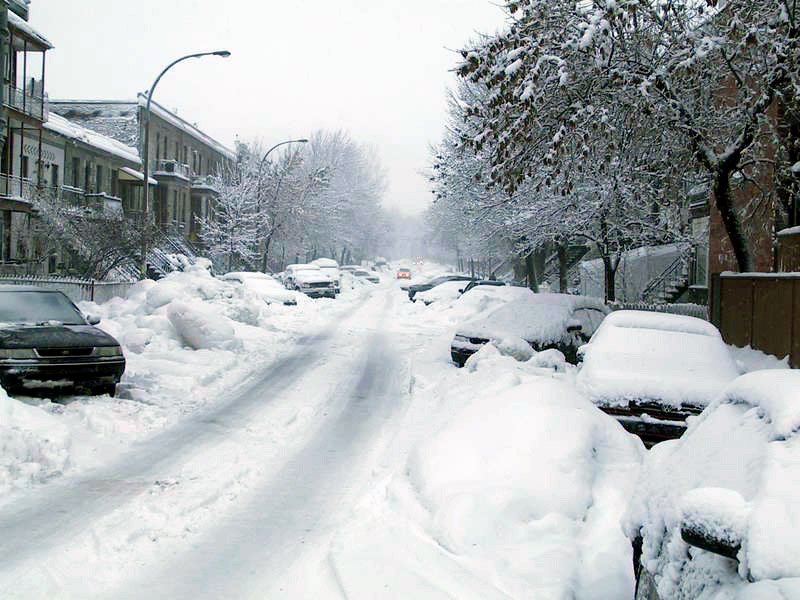
The first thing I remember about my apartment in the Plateau was the cold floor through my socks. February, late afternoon, nobody had turned the heat on yet between tenants. The wood was original to the building, which meant it was somewhere north of a hundred years old, and it carried winter the way a bus shelter carries it. I dropped my bags in the entryway and stood there listening to the radiator clang awake, this slow industrial sound that I would come to know like a second heartbeat. Outside, a guy across the street was shovelling out his Civic with a broken broom. Snow was already coming back to fill the spot.
That was the moment I understood that I had moved to a real winter city, and that nobody had warned me about a hundred small things they should have. So here is what I wish someone had told me before I moved here. The visa, the language, the rent, the parking, the heating bills, the tipping. All of it, the way a friend would tell you over a beer.

I am not going to pretend Montreal is the cheap European city it was when I first arrived. Rents have moved. The healthcare wait is real. The summers are short. But I am also not going to oversell the place. You will know if it is for you within about six months, and most people who try it stay.
In This Article
- The visa is its own subject, talk to the government
- Pick a neighbourhood that matches how you want to live
- Apartments are described by total rooms, not bedrooms
- Moving day is July 1st (and that is not a joke)
- French is real, but you can survive on English in Montreal proper
- Winter is real and the parking ban is the part nobody tells you about
- Heating bills, hydro, and Hydro-Québec
- Healthcare, RAMQ, and the family doctor situation
- Tipping is in, and it is more than you think
- SAQ versus dépanneur for alcohol
- Getting around: BIXI, STM, and the car decision
- Banking, phone, and the boring practical stuff
- Work, taxes, and the Quebec discount
- Settling in socially is harder than you think
- What I would do differently if I moved here again
The visa is its own subject, talk to the government
I will say this once and move on, because I am not an immigration lawyer and you should not take legal advice from a blog. If you are not already Canadian or a permanent resident, your route in is going to be one of: a work permit (often tied to a specific employer), a study permit (Montreal has roughly 188,000 students for a reason), the federal Express Entry program, or the Quebec-specific skilled worker stream. Quebec runs its own immigration on top of the federal system, which means an extra application, an extra fee, and usually a French test. Plan for it taking longer than the federal route into Ontario or BC.
The official sources are Canada.ca’s immigration portal for the federal side and Québec.ca’s immigration section for the provincial layer. Read both. If you can afford a Regulated Canadian Immigration Consultant or a lawyer, hire one. A botched application is worse than the consultant fee, and you cannot un-botch a refusal.
One thing the government pages will not say plainly: Quebec PR through the province takes longer than PR through other provinces. I have heard “18 to 36 months” from people I trust. Some American friends went the workaround route, got PR through Ontario or New Brunswick, then moved to Montreal afterward. Legitimate plan if speed matters.
Pick a neighbourhood that matches how you want to live
This matters more than people realise because Montreal neighbourhoods feel like different small cities. You will hear newcomers say “I live in Montreal” and locals immediately ask “where” because the answer changes everything. Here is how I would orient a friend.
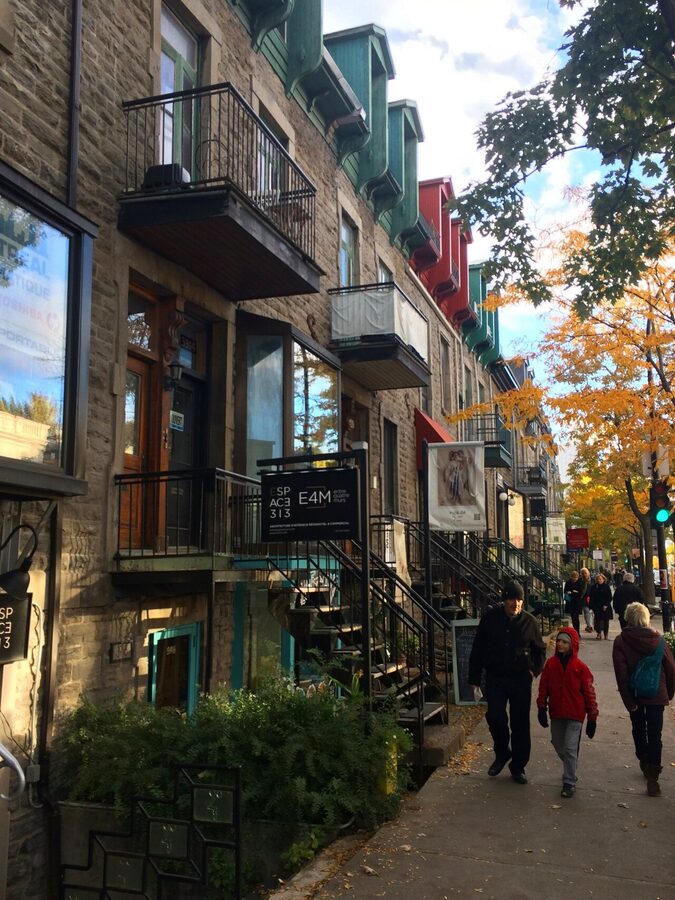
The Plateau (Le Plateau-Mont-Royal). Northeast of downtown, full of the iconic spiral exterior staircases and triplex apartments, lots of cafés, lots of people in their twenties and thirties, francophone-leaning but mixed. Rents have climbed hard in the last few years. Parking is awful. Walkability is excellent. Avenue du Mont-Royal and rue Saint-Denis are the main spines. If you have ever been to a “trendy” neighbourhood guide for Montreal, this is the one being described. Move here if you want to be in the middle of the action and you do not own a car.
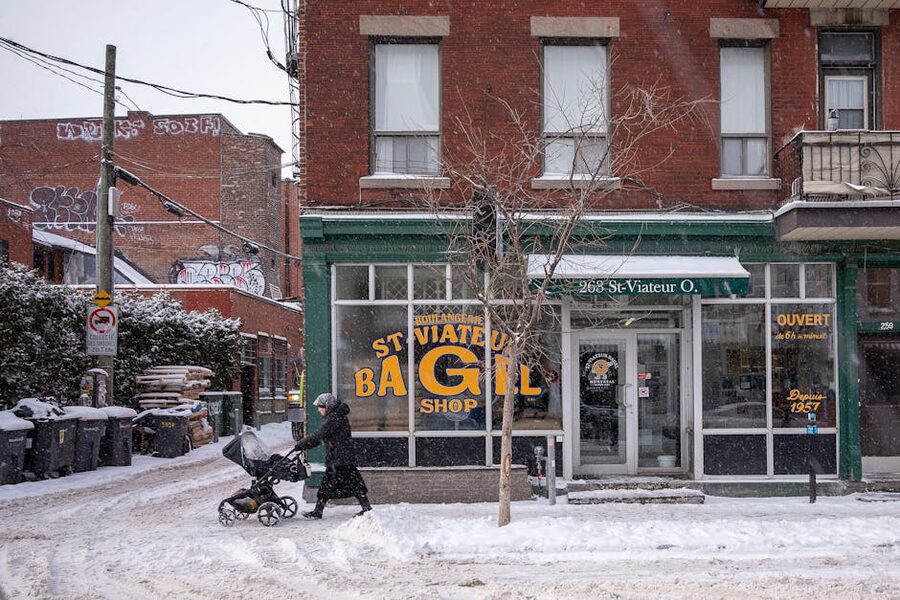
Mile End. Technically inside the Plateau borough but everyone treats it as separate. Smaller, more multicultural, the home of Montreal’s bagel war (St-Viateur and Fairmount, both 24 hours, take a side). A Hasidic Jewish community lives here alongside artists, musicians, and a handful of old industrial spaces that became Ubisoft and a few smaller tech companies. Rents are gentrifying-grade these days, but it is still one of the city’s most distinctive neighbourhoods.
Outremont. Upscale, francophone, leafy. Sits next to Mile End but has a different energy entirely, more “professional family” than “in your twenties”. Beautiful parks, expensive houses, very good schools. If you have kids and a budget, you will see Outremont on every list.
NDG (Notre-Dame-de-Grâce). West-end Montreal, anglophone-dominant, leafy. A Reddit thread about the city once described NDG as “Brooklyn-ey” and that lands. Lots of expats, students, families, and people who want a real neighbourhood without the Plateau price tag. Monkland Avenue is the main drag.
Rosemont and Petite-Patrie. Solid francophone family neighbourhoods east of the Plateau. Cheaper than the Plateau, more residential, well-served by metro (Beaubien, Rosemont, Jean-Talon). If you want to actually use your French day to day, somewhere like Rosemont will force the practice in a way that the Plateau will not.
Verdun. South of downtown along the Lachine Canal, formerly working-class, now an “up-and-coming” zone in the way that everyone says about everywhere. Wellington Street has the cafés. Rents are still a bit more reasonable than the central neighbourhoods, but not for long. The metro green line covers it.
Griffintown. A condo neighbourhood between downtown and the Old Port. Modern, glass, slightly soulless if you ask me, but extremely convenient to downtown jobs. Lots of young professionals. If you want a new build with an elevator and a gym, this is the area to look.
Hochelaga (Hochelaga-Maisonneuve, often “HoMa”). East of downtown, traditionally working-class francophone, gentrifying like everywhere else but still cheaper than the Plateau. The Olympic Stadium is here. Rue Ontario has the bars.
If you are coming from somewhere with serious money like New York or San Francisco, all of these will look affordable. If you are coming from a smaller Canadian or American city, do not assume Montreal is still cheap. The 2022-onwards rent climb was severe; a one-bedroom in the Plateau that went for $900 a few years ago is now in the $1,400 to $1,800 range. Pull current numbers from Rentals.ca before signing anything.
Apartments are described by total rooms, not bedrooms
.jpg)
This is a small thing that confuses everyone the first time. Montreal apartments are listed as “3½”, “4½”, “5½” and so on, where the half is the bathroom and the other numbers are total rooms (kitchen + living + bedrooms).
- 3½: kitchen, living room, one bedroom, bathroom. A one-bedroom in any other city.
- 4½: kitchen, living room, two bedrooms, bathroom. A two-bedroom.
- 5½: kitchen, living room, three bedrooms, bathroom.
- 2½: a studio with a separate kitchen.
- 1½: a true studio.
You will see places listed on Kijiji, Facebook Marketplace, and Centris, much more than via real estate agencies. Most people find their apartment through Kijiji and Marketplace listings posted directly by the landlord. Walk through it. Do not sign on photos alone, especially in the Plateau or Mile End where some of the buildings are over a hundred years old and “charm” is a polite way of saying “the kitchen floor slopes”.
Moving day is July 1st (and that is not a joke)
Most leases in Quebec end on June 30th and start on July 1st. This is partly tradition and partly a holdover from a 1970s law that wanted to avoid kids switching schools mid-year. The result is that on Canada Day every year, the entire city moves at once. Rental trucks are booked out months ahead. Friends start asking each other for help in May. Sofas, mattresses, and shelving units appear on the sidewalk for the taking, which is genuinely useful if you are arriving and need furniture.
If you can time your move for July 1, you will have the most apartment options and the most chaos. If you arrive at any other time of year, you will have fewer options but a less stressful day. Aim to start looking 60 to 90 days before you want to move in, especially for the July rush, because the good listings go in March and April.
One thing to know: as a tenant in Quebec you have very strong rights. The Tribunal administratif du logement (the rental board) protects you on rent increases, eviction, and lease assignments. A “lease transfer” (cession de bail) lets a tenant pass their existing lease to a new tenant at the existing rent, which is one of the only legal ways to dodge the post-2022 rent jumps in popular neighbourhoods. If you find one, snap it up.
French is real, but you can survive on English in Montreal proper
.jpg)
Here is the truthful version of the language situation, because the official one and the angry-Reddit one both miss something.
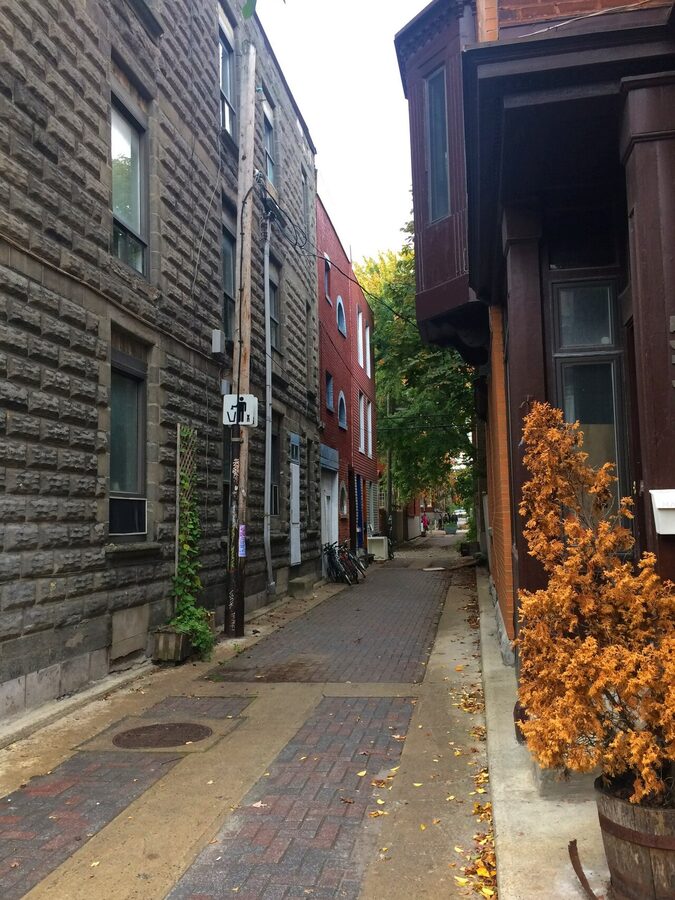
You can live and work in central Montreal in English. Plenty of people do. McGill University, Concordia, large parts of downtown, the tech sector, much of the Plateau and NDG and Westmount, all function in English daily. Restaurants in central neighbourhoods will switch to English the second you order in English, often without you having to ask. Bilingualism is the city’s resting state.
What is also true: Quebec has laws that protect French as the public language (the most-discussed are Bill 101 and the more recent Bill 96), public-facing signage is French-first, and government interactions, school enrolment, and most professional services will lean French. If you live east of Saint-Laurent, you will hear more French. If you live in Rosemont or Hochelaga, your dépanneur (the corner store, where you buy beer after the supermarkets close) will probably greet you in French and you will sound rude if you do not at least manage bonjour back.
What I would tell a friend: learn enough French to be polite, get a free or cheap class going (the provincial government runs francisation programs that are genuinely useful), and accept that fluency is a multi-year project. The locals who switch to English to help you out are doing you a favour, not making a statement, and the right move is to thank them in French and keep trying. Bills 21 and 96 are real and politically charged and worth reading about before you commit to the move, especially if you wear religious symbols or if you are bringing a school-age child into the public system.
If you are not sure whether you want to be in Montreal or somewhere else in Quebec, our overview piece on things to do in Montreal is a quick way to get oriented to what daily life actually involves.
Winter is real and the parking ban is the part nobody tells you about
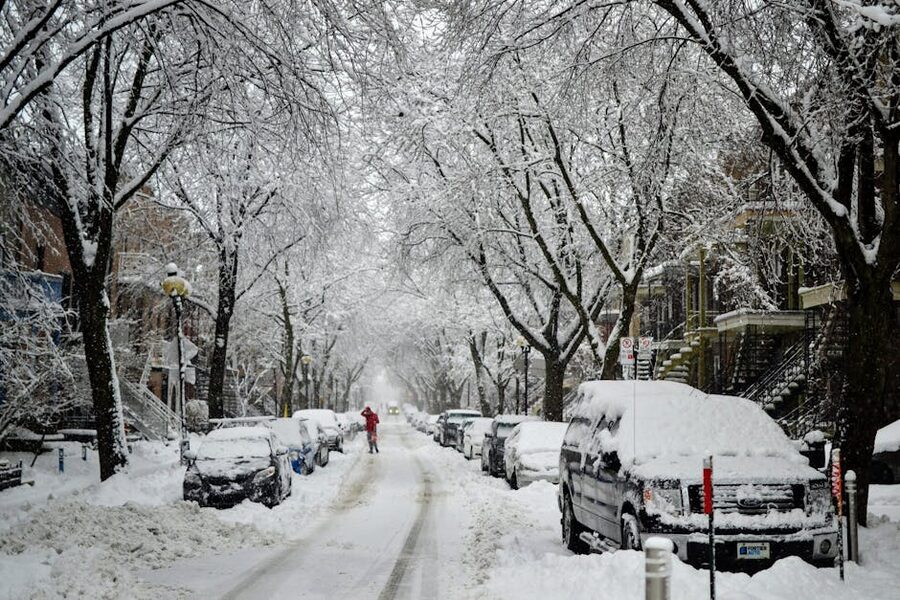
Montreal winter is not Toronto winter. It is colder, longer, and snowier. You can expect snow on the ground from early December into late March. January and February regularly hit -20°C and the wind off the river makes it feel worse. Anyone who tells you “it is a dry cold” is lying to you for kindness.
The right gear is non-negotiable, not a fashion choice. A serious parka rated to about -30°C, lined waterproof boots with grippy soles (the sidewalks are slick), thick socks, a real wool hat, and gloves you can actually grip your keys in. Layer underneath. Synthetic base layers help on the coldest days. None of this is optional in February.
Now the part nobody warned me about: the snow-removal parking ban. After a heavy snowfall, the city sends crews through to plough and clear the streets. Each side of each street gets a date and time when you cannot be parked there, posted on temporary orange signs that go up the day before. If your car is parked there, the city tows it. The tow yard is a long way out, the fee is in the low hundreds, and you will be very angry. Download the city’s snow removal app or check the official page, sign up for SMS alerts, and get in the habit of moving the car as soon as you see the signs go up. Locals make it a routine; visitors and newcomers get towed all the time.
The other thing that catches people: Quebec law requires winter tires on every passenger vehicle from December 1 through March 15. Studded tires are allowed in a longer window. The penalty for getting caught on summer tires in that window is a fine of a few hundred dollars, plus your insurance company will hate you if you crash. If you are buying a car, factor a set of winter tires plus rims into the cost. Most garages will swap them on and off twice a year for a small fee, and you store the off-season set somewhere (basement, balcony, garage, friend with space). The official rules and current dates are on the SAAQ winter tire page.
Heating bills, hydro, and Hydro-Québec
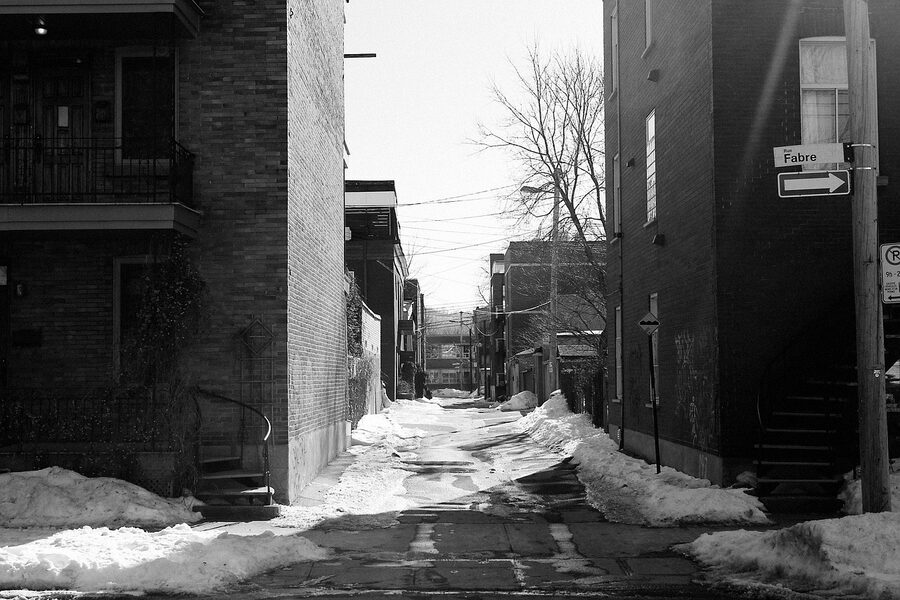
Most apartments in Montreal are heated by electricity. Quebec runs on hydroelectric power, which historically meant that electricity was very cheap by North American standards. It is still cheaper than most of Canada, but a poorly insulated old triplex will still hit you with a $200 to $400 monthly Hydro-Québec bill in January if your radiators are running constantly. Newer buildings are much better insulated and run lower.
Things to ask before signing a lease:
- Is the rent chauffé (heated, included) or do you pay heating separately? Big difference in winter.
- What is the average winter electricity bill? Landlords often have records, or you can call Hydro-Québec to ask for the address’s history.
- Are the windows actually sealed? If you can feel a draft in October, you will be miserable in January.
Internet service is a separate bill. The big providers are Bell, Vidéotron, and a handful of resellers like TekSavvy and Oxio that piggyback on the same lines for cheaper rates. The resellers are usually the move if you do not need TV bundled in.
Healthcare, RAMQ, and the family doctor situation
Quebec has a public healthcare system, run by the Régie de l’assurance maladie du Québec, usually shortened to RAMQ. Once you are a resident, your doctor visits, hospital stays, and emergency care are covered. Prescriptions are partly covered through a public plan if you are not enrolled in a private one through your employer. Dental and vision are not covered as adults. Mental health is partially covered but the wait lists are long.
The thing nobody tells newcomers clearly: there is a waiting period before your RAMQ coverage starts. For most permanent residents and work permit holders moving to Quebec from outside Canada, the wait is up to three months. During that window you need private travel insurance to cover anything that goes wrong, because hospital stays in Canada are not free for non-residents and a single ER visit can be expensive. Buy travel insurance before you arrive. Confirm the exact rules for your status on the RAMQ site and call them if anything is unclear.
The harder part is finding a family doctor. Quebec has a chronic shortage. Even with RAMQ in hand, getting assigned a family doctor through the Guichet d’accès à un médecin de famille waitlist can take a year or more. In the meantime, walk-in clinics and the Super-Cliniques (Groupe de médecine de famille, GMF) handle most non-emergency stuff. The Bonjour-santé and Clic Santé apps let you book walk-in appointments online, which is genuinely the right move because showing up at 7am to wait for a same-day slot is otherwise the alternative.
Tipping is in, and it is more than you think
Americans assume Canada works like the US. Europeans assume it does not apply at all. Both are wrong about Quebec. Tipping is part of the social contract here.
- Restaurants: 15-20% of the pre-tax total. The bill will often suggest 18%, 20%, and 22% as buttons on the card terminal. 15% is the floor for acceptable service. 20% is normal for good service. Servers are taxed on assumed tips and rely on the income.
- Bars: a dollar or two per drink, or 15% on a tab. Bartenders remember.
- Taxis and ride shares: 10-15%, round up.
- Hairdresser: 15-20%.
- Delivery: a few dollars cash on top of any service fee, especially in winter when the driver is freezing.
- Coffee shops: there will be a tip button, you can skip it for a takeaway coffee without judgement, but locals usually drop a dollar.
The taxes you see on the bill are separate from the tip. Quebec sales tax is 14.975% combined (5% federal GST plus 9.975% provincial QST), and that gets calculated on the pre-tax total, then the tip goes on top of the pre-tax subtotal, not on top of the taxed total. If you tip 18% on the post-tax number you are basically tipping 21%, which is also fine, but locals do the smaller math.
SAQ versus dépanneur for alcohol
Two things to know about buying drinks in Quebec.
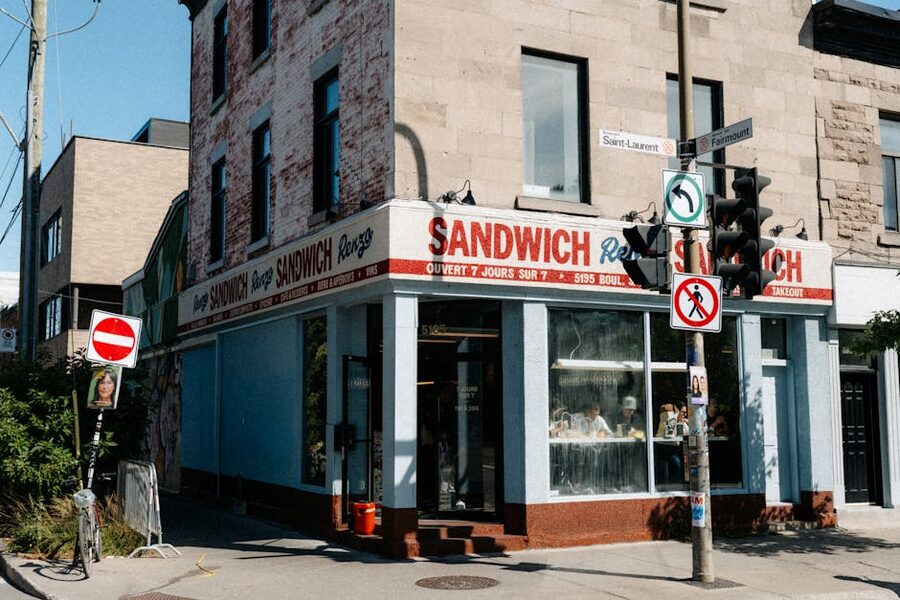
First, Quebec is one of the few places in Canada where you can buy beer and wine at the corner store. The dépanneur (the corner store, abbreviated dep) sells beer and wine until 11pm, every day. This is genuinely a quality-of-life upgrade if you have ever lived somewhere with a provincial monopoly. Selection at the dep skews mass-market and the wine is mostly forgettable, but the beer selection in many deps is excellent because Quebec has a real microbrewery culture and many small brewers distribute through corner stores. Picking up a four-pack of a local craft beer at the dep on the way home is a normal Tuesday.
Second, the SAQ (Société des alcools du Québec) is the provincial liquor store. Spirits are sold there only, the wine selection is much better than the dep’s, and prices reflect a state monopoly. SAQ Express stores are smaller and stay open later; SAQ Sélection stores are the big ones with a sommelier on the floor.
The legal drinking age in Quebec is 18, one year younger than the rest of Canada. This matters if you are bringing teenagers, and it is also why Quebec is a popular weekend destination for college students from Vermont and upstate New York.
Getting around: BIXI, STM, and the car decision

Most Montrealers I know who live on the island do not own a car, and they are correct.
The STM (Société de transport de Montréal) runs the metro and the buses. The metro has four colour-coded lines (orange, green, blue, yellow), 68 stations, and runs roughly until 12:30am weekdays and 1:30am Friday and Saturday nights. The yellow line is one stop and goes to Longueuil on the South Shore. The 747 bus runs between downtown and Trudeau Airport, and one ticket on it is good for 24 hours anywhere on the network. A single ride is $3.75; a monthly pass is $97 for adults. STM tickets work on both metro and buses.
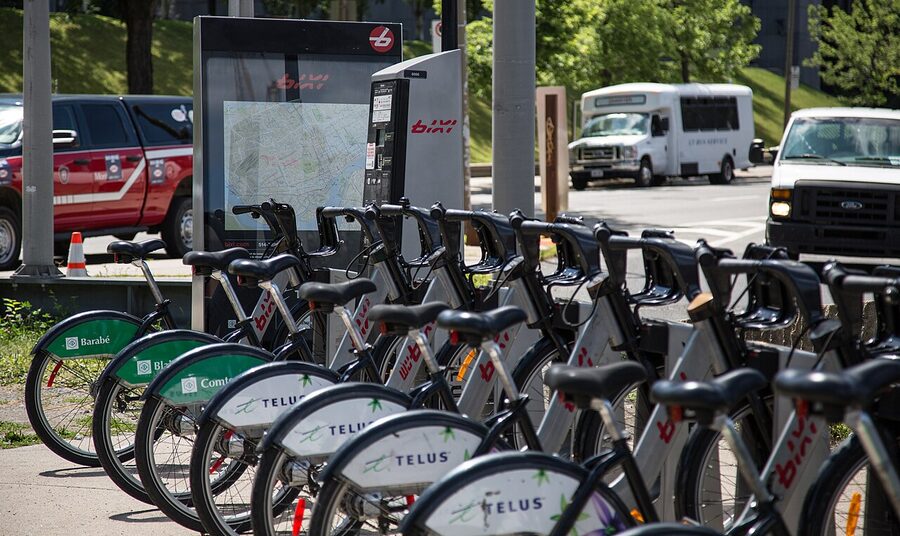
BIXI is the bike-share. The system runs roughly mid-April through mid-November (it closes in winter when the lanes are full of snow), and a yearly subscription is the right move if you commute by bike at all. The Réseau Express Vélo, the city’s protected bike highway network, makes a lot of routes that used to be terrifying genuinely fine.
If you do want a car, Communauto is the local car-share. It is cheaper than owning, especially when you factor in parking, the snow-tire swap, registration, and insurance. Owning a car in Montreal is mostly a “I have kids and a house and we go to the cottage” decision.
One genuinely odd Montreal thing worth knowing: right turns on red are not allowed on the island of Montreal, even though they are allowed everywhere else in Quebec. If you are coming from elsewhere in Canada or the US, you will sit at a red light wondering why nobody is moving. They cannot. Wait for the green.
Banking, phone, and the boring practical stuff
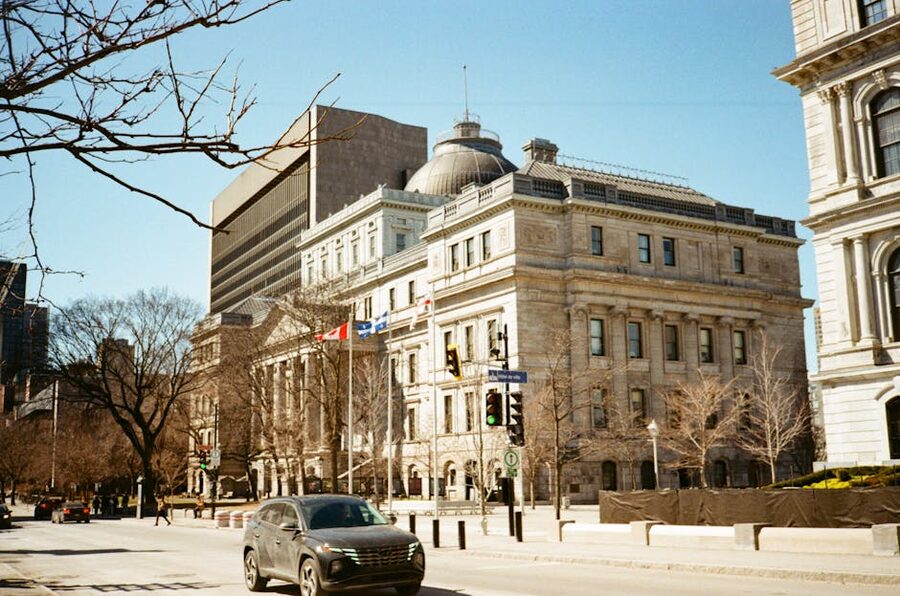
The big Canadian banks (RBC, TD, BMO, Scotiabank, CIBC, National Bank, Desjardins) all operate in Montreal. Desjardins is the Quebec credit union, dominant locally, with French-speaking branches everywhere. The big national banks have newcomer programs that can pre-approve accounts before you arrive, which is faster. Bring your passport, immigration paperwork, and proof of address.
Phone plans in Canada are expensive compared to most of Europe. The big three (Bell, Rogers, Telus) and their flanker brands (Fido, Koodo, Virgin Plus) cover the market, with Public Mobile and Lucky Mobile as the lower-end options. Expect to pay $35-55 a month for a usable plan.
If you are staying long-term, you have to switch your existing driver’s licence to a Quebec one within 6 months. The SAAQ handles this. Many countries have reciprocity agreements with Quebec (most US states, France, Germany, Japan, the UK and others) which means a straight swap with no test. Some require a road test. Check before you go.
Work, taxes, and the Quebec discount
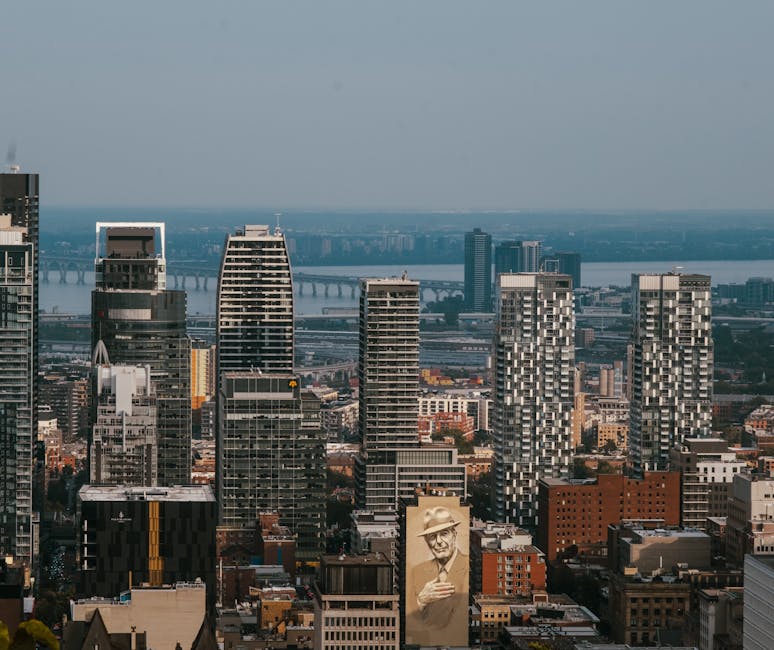
Salaries in Montreal are lower than Toronto, lower than Vancouver, and much lower than the US. The trade-off is housing, which is also lower. The math works fine for individuals and works very well for couples with kids, because Quebec’s subsidised public daycare runs around $9 a day, which is unheard of in the rest of North America.
The tech sector is concentrated around the Plateau, Mile End, and the Quartier de l’innovation near downtown. AI and gaming are large (Ubisoft, Mila, several smaller studios). Finance and aerospace also have a footprint. The tech market has been tight since 2023, so do not assume you will land a job in the first month if you arrive without one lined up. If you can negotiate a remote US salary while living here, that is the move some of my smartest friends have made.
Taxes are the price of the cheap daycare, the cheap healthcare, the cheap university tuition, and the bike lanes. Quebec has the highest combined income tax rates in Canada. Plan for roughly 30-45% of your gross to disappear into deductions, depending on your bracket. Talk to an accountant in your first year, especially if you have US tax exposure (American citizens and green-card holders still file US taxes regardless of where they live).
Settling in socially is harder than you think
The brutal truth: making friends as an adult in Montreal is difficult, and most people I know underestimate this. The city is friendly in a passing-conversation way and cliquey in a get-invited-to-things way. People here keep their existing friend groups from CEGEP and university, and access to those groups depends on bumping into them somehow.
What works: joining something with a regular schedule. A run club, a bouldering gym, a French class, a volunteer shift, a sports league. Repetition over months, not flashy one-off events.
If you arrive on a work permit and your office is in person, your colleagues will be your starting friend group whether you wanted that or not. Take the after-work drinks even when you are tired. Say yes to the cottage weekend invite even if you barely know the host. The first six months are when you build the network, and after that it gets much harder.
For the food-and-drink angle, my guide to Montreal brewpubs and microbreweries doubles as a list of places where regulars actually go. If you want a slow afternoon to learn the city’s layout, the Old Montreal walking itinerary covers the historical core in a few hours.
What I would do differently if I moved here again
.jpg)
A short list, in no particular order, because the year-one mistakes were expensive and avoidable.
- Buy the parka before you arrive, not after. The fall jacket you wore in October is not the coat. Canada Goose, Quartz Co., Kanuk and Nobis all run real warmth, and a $700 coat that lasts a decade beats buying replacements.
- Set up the snow parking ban SMS alerts in week one if you have a car. The tow fee is more than dinner for four.
- Take the lease transfer if it shows up, even if the apartment is not perfect. Existing leases are gold.
- Start the family doctor registration the day you have RAMQ. The wait is a year, and it is not getting shorter.
- Learn the metro lines by colour, not by station name. “Green to Berri-UQAM, transfer to orange” is how locals navigate.
- Buy waterproof boots in October. Not December, when the good ones are sold out.
- Accept that the first February is the hardest one. After that you are Montreal-acclimated and you start to enjoy winter, the way every Montrealer eventually does.
The thing about Montreal is that it is a city you have to commit to for a few seasons before it makes sense. The summer is so good it almost feels like a different city. The fall has the colours. The winter is the test. The spring is when you remember why you stayed. If you can make it through one full cycle without packing up, you will probably stay for a long time. Most of the people I know who moved here did. For a broader picture of what to do once you are settled in, our overview of things to do in Montreal is worth a scroll, and the expat life category on the site has more pieces on settling in.
Welcome. Wear the layers.