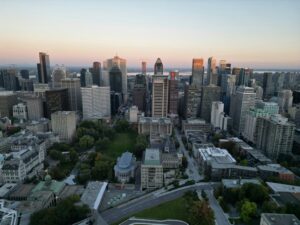
The whole thing started on May 17, 1642. A French military officer named Paul de Chomedey de Maisonneuve waded ashore at the tip of a marshy island, planted a wooden cross, and called the place Ville-Marie. Forty-something colonists with him. A nurse named Jeanne Mance who would go on to found the hospital that’s still here, four blocks inland and rebranded a few times. They picked the spot because the river narrowed and the rapids upstream stopped the bigger ships. So this is where the city had to start.
You can stand on the exact spot. It’s now the front entrance of the Pointe-à-Callière museum at 350 Place Royale, and the museum’s basement is literally the foundations of the original fort. Walk one block north and the cobblestones under your feet on rue Saint-Paul are laid over the colony’s first commercial street, which the surveyor Dollier de Casson traced out in 1672. So when people say Old Montreal is “the historic part,” they’re not exaggerating. Most of what you walk on is the original street grid.
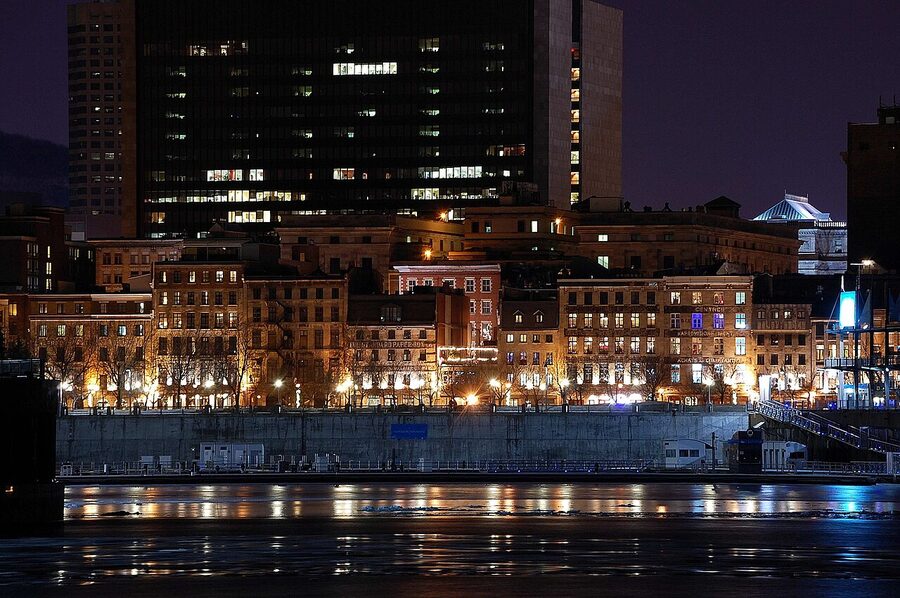
What follows is the route I send people on when they ask, “I have a half day in Old Montreal, what do I do?” It’s a loop that starts and ends at a metro station, takes about three to four hours at a real walking pace (longer if you go inside Notre-Dame and the Pointe-à-Callière), and hits everything that’s worth your time without making you feel like you ran a 10K. I’ve also flagged the seasonal stuff because Old Montreal in February is a different city than Old Montreal in July, and pretending otherwise is what tourist guides do.
In This Article
- The route at a glance
- Stop 1: Place d’Armes (and a quick word on the metro)
- Stop 2: Notre-Dame Basilica
- Stop 3: Walk down rue Saint-Sulpice to rue Saint-Paul
- Stop 4: Pointe-à-Callière
- Stop 5: Place Royale and the Old Customs House
- Stop 6: Place Jacques-Cartier
- Stop 7: City Hall (Hôtel de Ville)
- Stop 8: Bonsecours Market and the chapel
- Stop 9: The Old Port and the waterfront walk back
- Stop 10: Back along rue Saint-Paul and out
- Practical: getting in and out
- Where to eat (without the tourist tax)
- Skip the calèche (you can’t anyway)
- Warm-weather Old Montreal vs cold-weather Old Montreal
- If you’ve got more time
- If you’re new to the city
The route at a glance
Start at Place-d’Armes metro (orange line). Walk five minutes south to Place d’Armes the square, which sits in front of Notre-Dame Basilica. Go inside the basilica. Walk down rue Saint-Sulpice to rue Saint-Paul. Turn left and walk east. Detour two blocks south to Pointe-à-Callière. Back up to Saint-Paul, keep walking east to Place Jacques-Cartier and City Hall. Continue east to Bonsecours Market. Drop down to the Old Port and walk west along the waterfront back to the Grande Roue and the Quays. Cut up rue McGill to Square-Victoria-OACI metro. Done.
Total distance is about three kilometres, all flat. No hills, but the cobblestones are uneven enough that you want real shoes, not sandals. If you want a longer day, stop for a coffee at Crew Collective, eat lunch at Jardin Nelson on Place Jacques-Cartier, and add an hour for the Old Port. If you want a shorter day, skip the museum and you’re back on the metro in two hours.
Stop 1: Place d’Armes (and a quick word on the metro)
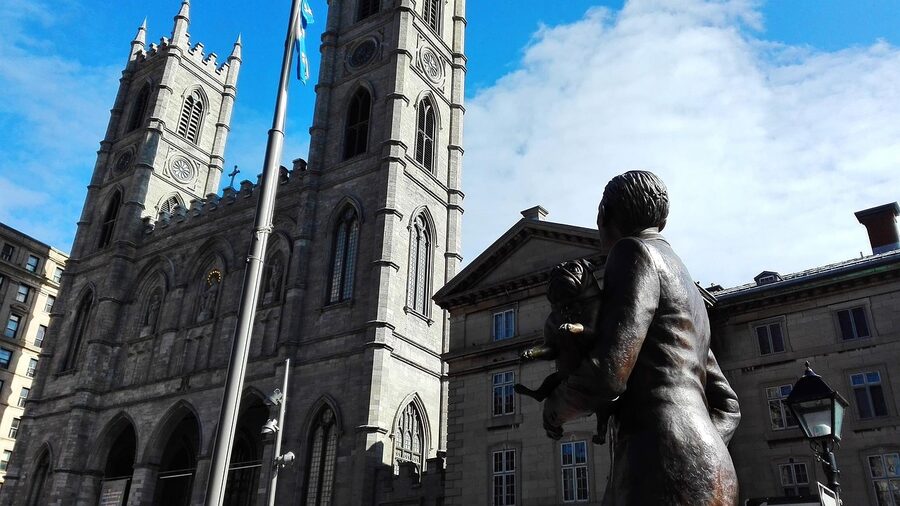
Get off at Place-d’Armes on the orange line. The exit comes up onto a small triangle of pavement just north of the square, and you’ll see the basilica’s spires from the moment you step out. Walk one block south. You’re now standing on Place d’Armes, the second-oldest public square in the city after Place Royale (which is two blocks further on). The big bronze monument in the middle is Paul de Chomedey de Maisonneuve, the founder. Wikipedia and most plaques will run you through who’s who on the four sides of the base; the short version is that the figures around him are the people Montreal would not exist without.
The square is ringed by some of the city’s oldest banks, the Sulpician Seminary (built 1684, the oldest building in the city, behind the basilica’s south side), and the New York Life building, which was Canada’s first skyscraper when it went up in 1889. Spend ten minutes walking the perimeter. There’s a Crew Collective café on the east side in the old Royal Bank tower; the interior is the original 1928 banking hall with a coffered ceiling, and a flat white costs about $5.50. It’s the most photographed café in the city for a reason. Use the bathroom there before you start, because once you’re in the basilica there isn’t another good one for a while.
Stop 2: Notre-Dame Basilica
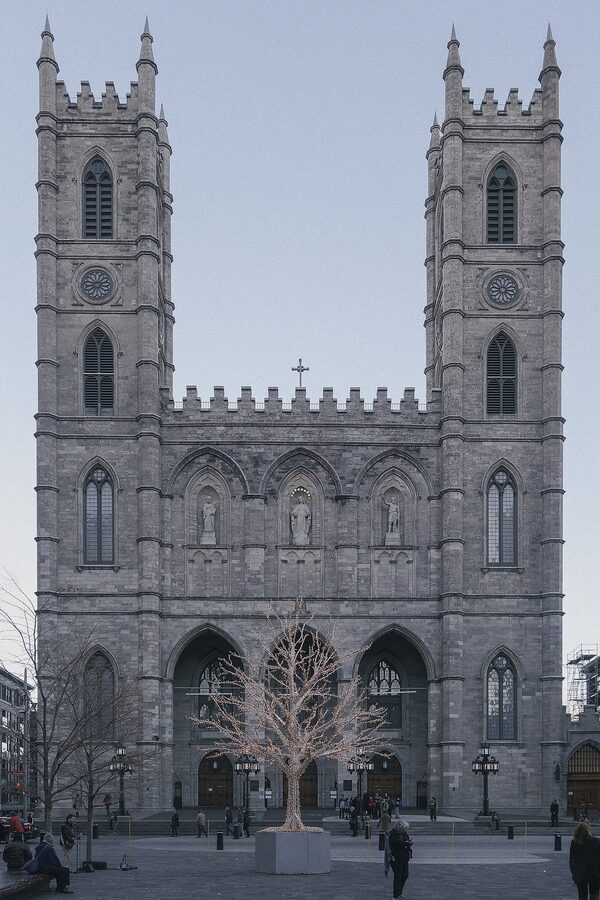
This is the unmissable one. Yes, you have to pay. Yes, it’s worth it. The interior is one of the most striking church interiors in North America: deep blue ceiling with gold stars, a carved gilded altar, and stained glass that tells the city’s history rather than biblical scenes (which is unusual). The architect was an Irish-American Protestant named James O’Donnell who converted to Catholicism after building it because he wanted to be buried in the crypt. Read that sentence again. It’s that kind of building.
Daytime sightseeing tickets run $37 for adults, $32 for seniors 65+, $31 for students 17 to 22, and $22 for kids 6 to 16, per the basilica’s official ticketing. Open daily, roughly 9am to 4:30pm Monday to Friday and shorter hours on weekends, but check the official site because they close periodically for services and weddings. The self-guided visit takes about an hour. There’s also the AURA evening light show, which projects the building’s history onto the walls and is genuinely good if you’ve already done the daytime visit; the combo ticket runs around $45. Avoid going during a wedding (Saturdays especially).
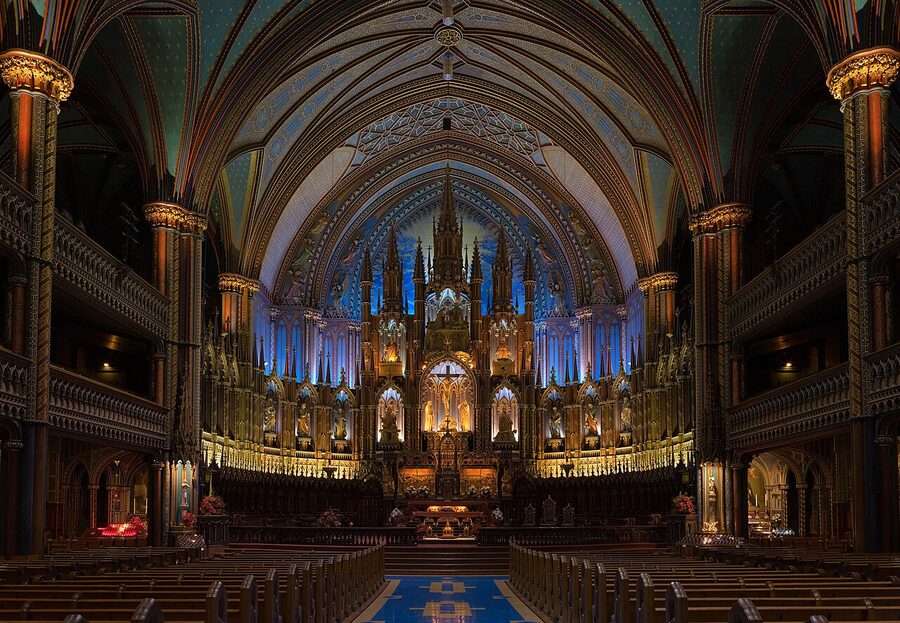
One quiet tip: a daily mass is held most weekday mornings around 7:30am or 12:15pm, and you can attend for free. You won’t get to wander, but you’ll see the building functioning the way it was built to function, which is a different experience from a tour. Sit at the back, dress decently, leave when you’ve had enough.
Stop 3: Walk down rue Saint-Sulpice to rue Saint-Paul
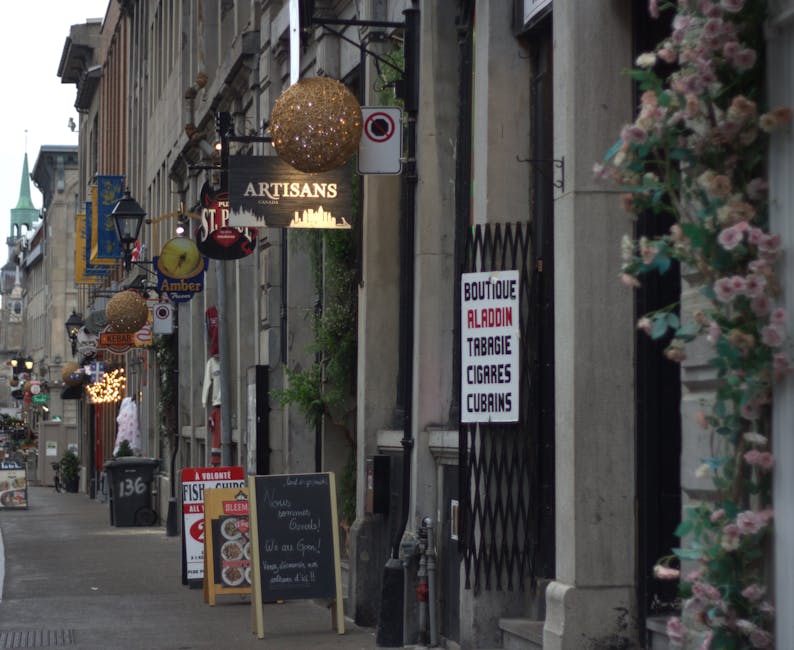
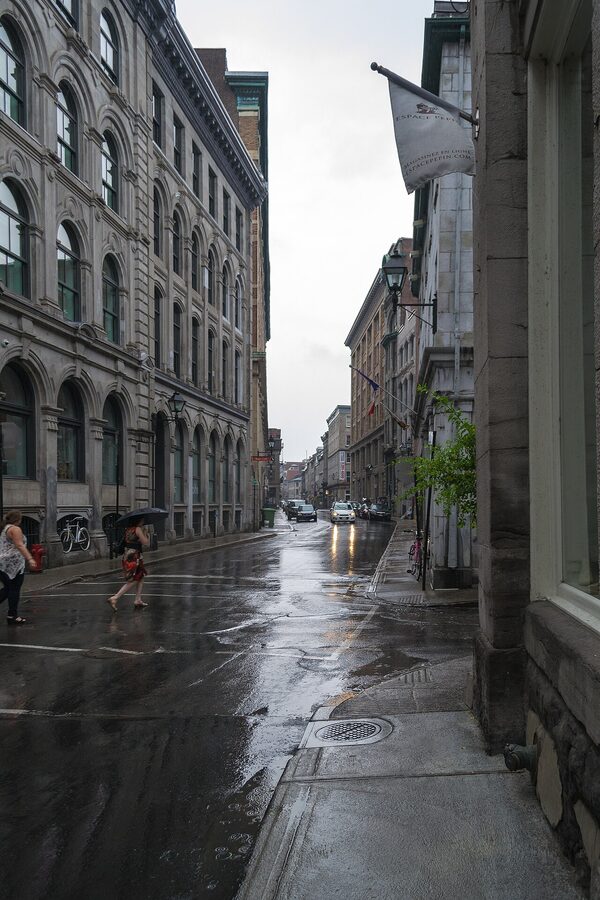
Leaving the basilica, cross Place d’Armes diagonally to its southeast corner and head down rue Saint-Sulpice. It’s a narrow street of grey stone, and at the bottom you hit rue Saint-Paul, the main artery of Old Montreal and the city’s oldest street. Turn left (east). For the next ten minutes you’re walking the spine of the colony.
Saint-Paul east of the basilica is heavy on souvenir boutiques, fudge shops, and places selling maple syrup in glass bottles shaped like leaves. Most of these are skippable. What you do want to look at is the buildings themselves: stone walls 80cm thick, windows set deep, doorways with wrought-iron numbers from the 1700s. Look up. The cornices and the second-floor balconies are where the actual heritage is, not what’s been turned into a shop on the ground floor.
If you’re hungry already, there’s a fish-and-chips counter, an ice cream window, and a few crêperies along this stretch. The crêperie at the corner of Saint-Paul and Saint-Vincent does a passable savoury crêpe for around $14. Skip the maple-flavoured everything; you can find better at Marché Jean-Talon, which is not on this walk and which I keep meaning to write about.
Stop 4: Pointe-à-Callière
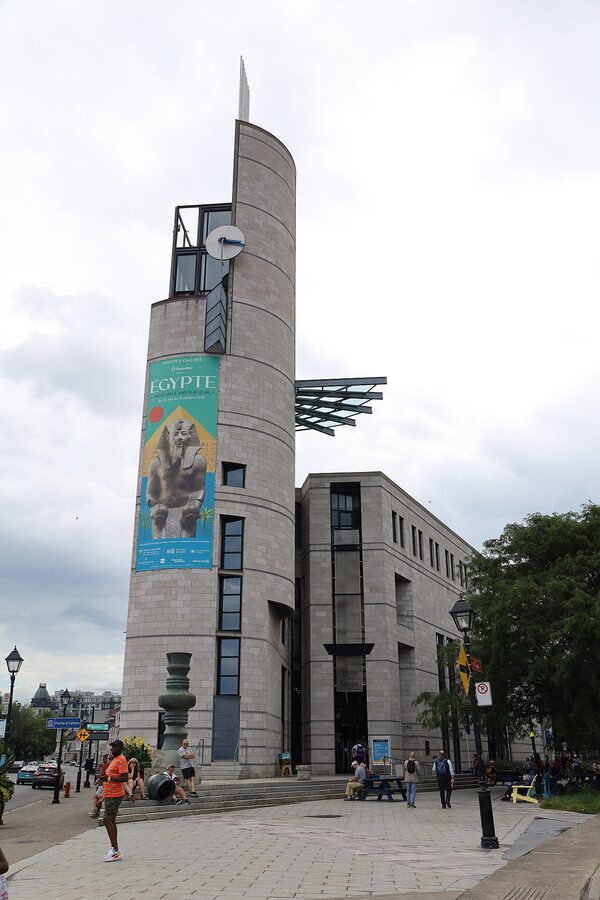
From the corner of Saint-Paul and Saint-Sulpice, walk two blocks south and you’ll see a strange pointed sail-shaped tower at 350 Place Royale. That’s Pointe-à-Callière, the city’s archaeology and history museum. It’s literally built on top of the original Ville-Marie fort. The basement contains the actual stone foundations, an unearthed sewer tunnel from the 1830s you can walk through, and a multimedia show that runs about 18 minutes and contextualizes everything you’re standing on.
General admission is $30 for adults, with discounts for students, seniors, kids, and free entry for children five and under. Open Tuesday to Friday 10am to 5pm, weekends 11am to 5pm, closed Mondays. Allow an hour and a half. If you only have time for one museum in Old Montreal, this is the one. The Stewart Museum on Saint Helen’s Island and the Château Ramezay are interesting too, but Pointe-à-Callière is the one that ties the whole walk together.
If you’re travelling with kids, this is your save. There’s a section where they can dig in a sandpit for “artifacts,” a multimedia thing where avatars from the four founding eras of the city (Indigenous, French, British, modern) walk you through what the place looked like, and the underground sewer is just dark and creepy enough to be exciting. My nephew, who hates museums, lasted ninety minutes here without complaining.
Stop 5: Place Royale and the Old Customs House
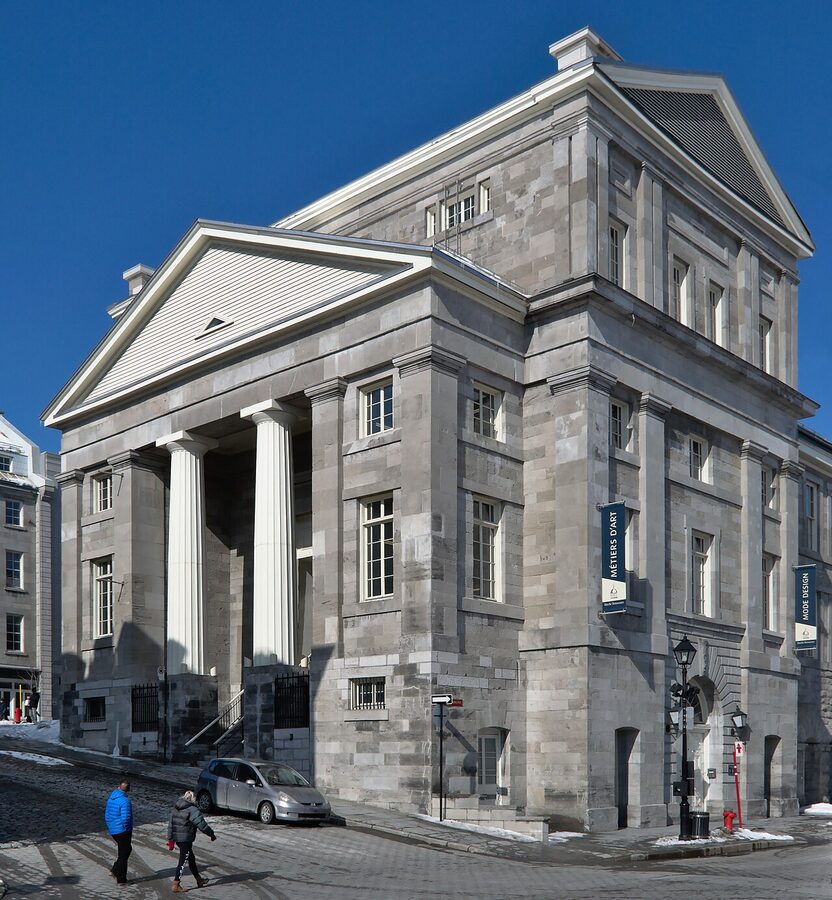
Right outside the museum entrance is Place Royale, a tiny cobbled square that looks unremarkable until you read the plaque. This is where Maisonneuve held the colony’s first market in 1657. It’s been a square continuously since then. Across the square sits the old Customs House (Ancienne Douane), a Greek Revival building from 1838 that’s now part of the museum. Spend two minutes here. It’s the kind of place you’d walk past if you didn’t know.
From Place Royale, head back up to rue Saint-Paul and continue east. You’ll pass the Auberge Saint-Gabriel on rue Saint-Gabriel (a one-block detour north), which has been operating as an inn since 1754 and is officially the oldest licensed restaurant in North America, though “oldest” claims around here always have an asterisk. The lunch isn’t cheap (around $35 for a main) but the dinner room has stone walls a foot thick and a bar that pours genuinely good Quebec gin.
Stop 6: Place Jacques-Cartier
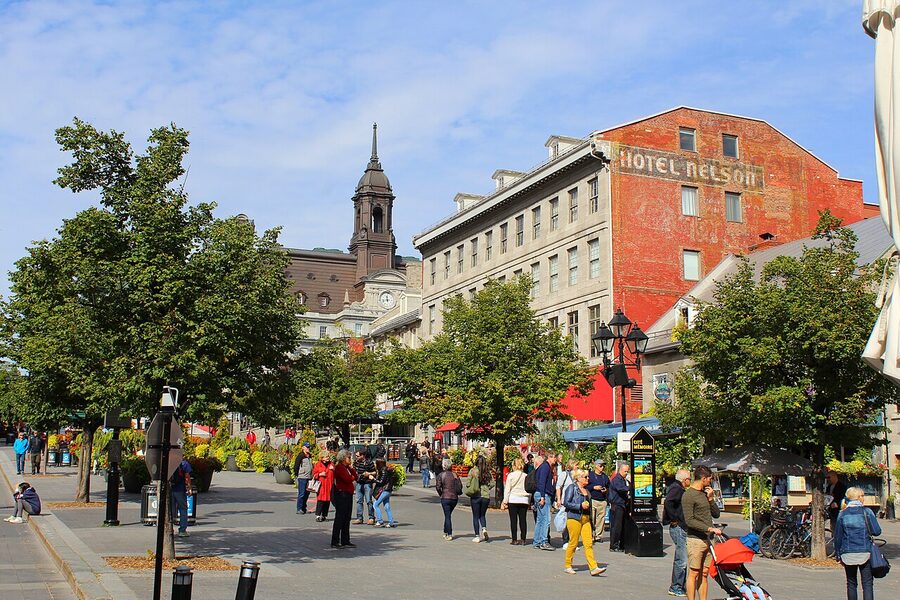
This is the long sloping cobbled square that runs from rue Notre-Dame down toward the river. From May through October it’s the city’s prettiest outdoor people-watching spot, full of caricaturists, buskers, flower sellers, and terrasse restaurants. From November through April it’s mostly empty and the wind comes up off the river hard, so the experience is different but still worth crossing.
The column at the top with a small statue on it is Nelson’s Column, dedicated to British admiral Horatio Nelson. It went up in 1809, four years after Trafalgar, and predates the more famous one in London’s Trafalgar Square by 33 years. Quebec opinions on Nelson have always been mixed (he was, after all, fighting the French) and the column has been vandalized, restored, vandalized again, and is now under permanent conservation discussion. Take the photo and move on.
If you want lunch, Jardin Nelson at the bottom of the square has a courtyard with live jazz on weekend afternoons in summer. The crêpes are the move (around $20), and the courtyard at 4pm with a glass of rosé is exactly the Old Montreal experience the postcards promise. Reservations recommended on weekends. If it’s full or you want something cheaper, walk one block to Olive et Gourmando on rue Saint-Paul Ouest, which does seriously good sandwiches and hot drinks for half the price.
Stop 7: City Hall (Hôtel de Ville)
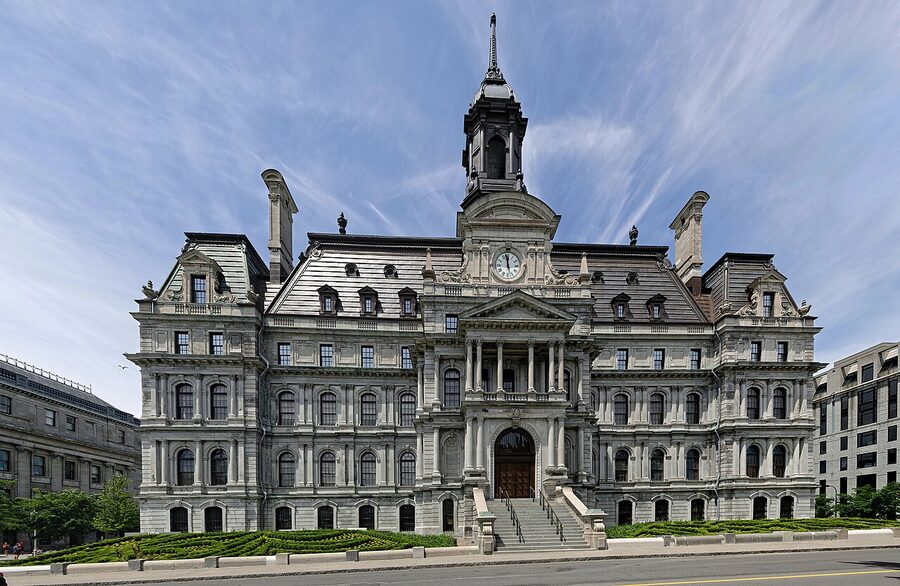
From the top of Place Jacques-Cartier, cross rue Notre-Dame and you’re staring at City Hall. The building is a Second Empire pile from 1878, gutted by fire in 1922, rebuilt in the 1920s with the same external silhouette and a fireproof concrete shell inside. After a long restoration that closed it for most of 2019 to 2023, it’s back open with a public visitors’ centre on the ground floor, which is free and worth ten minutes for the historical exhibits.
The big moment in this building’s history happened on July 24, 1967, when the French president Charles de Gaulle stepped out onto the central balcony during Expo 67, looked at the crowd, and shouted “Vive le Québec libre!” (long live free Quebec). It detonated a diplomatic crisis with Canada and gave the Quebec sovereignty movement its most famous quote. Look up at the centre balcony as you cross the street; that’s the spot.
To the right of City Hall is Champ-de-Mars, a small park where the original colonial fortifications were uncovered during a 1990s dig. You can see the stone foundations of the old city wall preserved at ground level. Free, two minutes, photo and on.
Stop 8: Bonsecours Market and the chapel
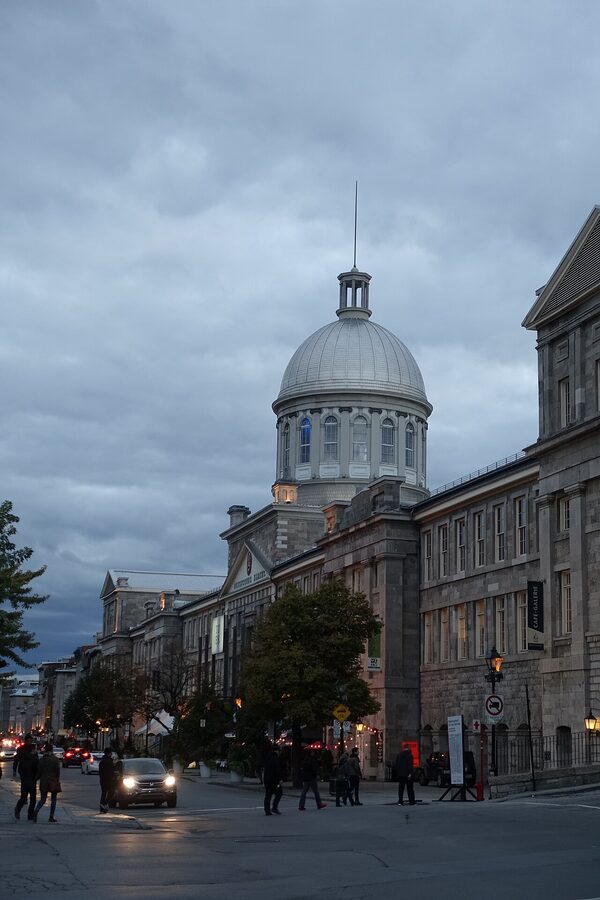
Walk five minutes east on rue Saint-Paul and the silver dome of Marché Bonsecours rises above everything. It opened in 1847 as the city’s main public market, doubled as the Canadian parliament for one term in 1849 (yes, Canada’s parliament was here for a year), and stopped being a working market in 1963. Today it’s a covered arcade of art galleries, design boutiques, and a few cafés. Free to enter. The interior columns and the iron staircase are worth seeing whether you buy anything or not.
One block east of the market is the small grey-stone Notre-Dame-de-Bon-Secours chapel, also known as the Sailors’ Church. It’s been here since 1771, has a small free museum about Marguerite Bourgeoys (one of Montreal’s founding women, eventually canonized), and you can climb the bell tower for a really good view of the river and the rooftops. The climb costs about $14 for adults including museum entry, and the tower is closed in winter for safety. Worth it on a clear day.
Stop 9: The Old Port and the waterfront walk back
From Bonsecours, drop down one block south to rue de la Commune. You’re now at the river. The promenade runs in both directions; you want to head west, back toward downtown, because that’s where the path to your endpoint is and because the walk goes past the good stuff.
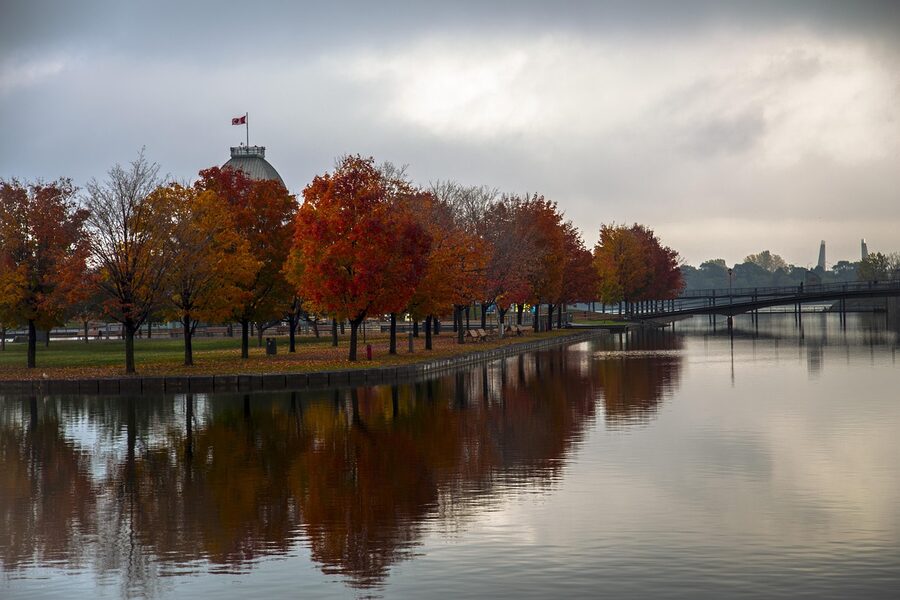
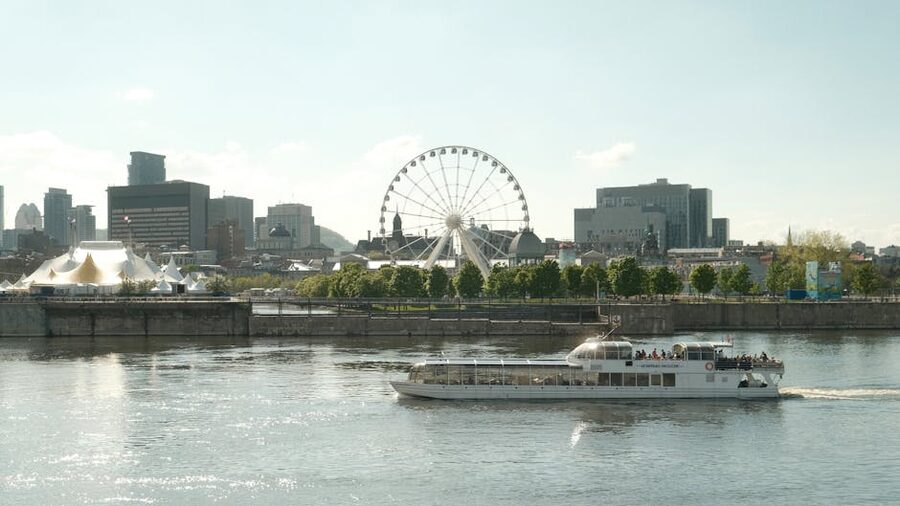
The Old Port today is a 2.5km strip of redeveloped waterfront with pavilions, the Science Centre, the Grande Roue ferris wheel, mini-golf, kayak rentals, a zipline in summer, and a skating rink in winter. The skating rink (Bonsecours Basin) is genuinely one of the city’s best winter activities. They flood the basin late November and it stays open through early March, weather depending. Skate rentals run about $12, admission to the rink is free, and the ice is maintained.
The Grande Roue is the 60-metre Ferris wheel you can see from anywhere on the waterfront. Open 10am to 10pm year-round, climate-controlled cabins, around $32 for adults. It’s a tourist ride and I’ve only been on it once. The view is fine. If it’s a clear day and you’ve got the time, sure. If it’s overcast or you’re tired, skip it. The view from the cobblestones is more interesting than the view from 60 metres up.
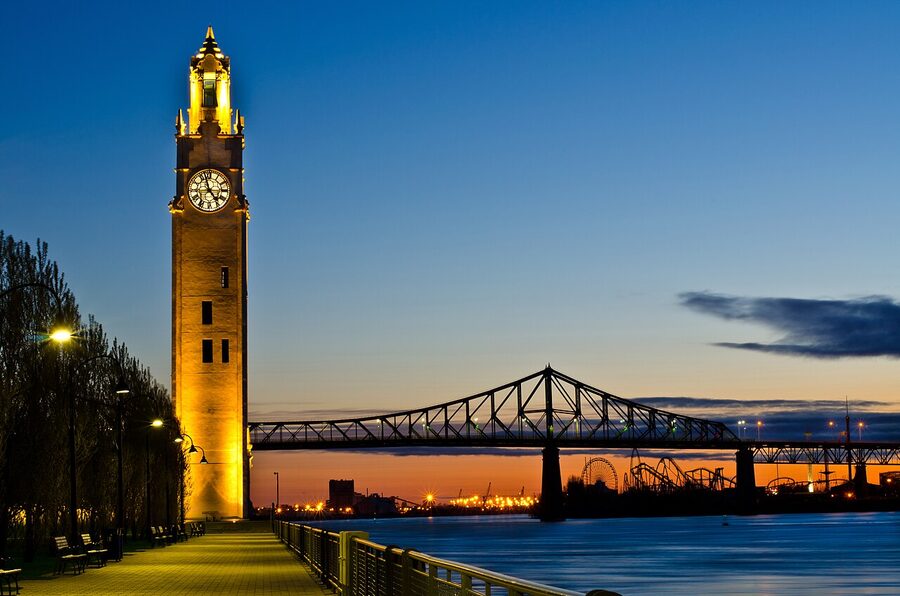
If you walked east first toward the Clock Tower, that’s worth a small note. The Tour de l’Horloge sits at the easternmost end of the Old Port, you can climb it for free, and the view of the Jacques-Cartier Bridge at sunset is one of those things people don’t expect. It adds about 25 minutes to the walk if you do it.
Stop 10: Back along rue Saint-Paul and out
From the waterfront, cut north on rue McGill or any of the smaller streets, work your way back to rue Saint-Paul, and walk west. The western end of Saint-Paul (around rue McGill) is quieter than the touristy middle stretch, with more architecture firms, agency offices, and a few of the better restaurants in the neighbourhood. If you want a beer at the end, Brutopia and Benelux are both downtown but a 12-minute walk from here. The closer Old Montreal options are the bar at Auberge Saint-Gabriel and a few hotel bars, all of which are pricier than they should be.
Endpoint: Square-Victoria-OACI metro on the orange line. From rue McGill it’s a four-minute walk north. You’re back on the metro and either heading home or up to somewhere else in the city. Total time, depending on stops and museum: three to five hours.
Practical: getting in and out
Three options.
Metro. Place-d’Armes (orange line) at the start, Square-Victoria-OACI (orange line) at the end. A single fare costs $3.75 with the OPUS card or $4 cash, valid 120 minutes including transfers. The STM stations are well-signed in both languages. If you’re staying downtown, you’re a five-minute ride away. Old Montreal is also walkable from anywhere downtown in 15 to 20 minutes if you’d rather walk it.
BIXI. The bike-share has docks at Place d’Armes, Place Jacques-Cartier, the Old Port, and the Quays. A single 30-minute trip is $1.30 plus $0.20 per minute, or you can buy a 24-hour pass for around $20 with unlimited 45-minute rides. Old Montreal is mostly flat and the river path is dedicated bike lane, so it’s actually a great BIXI route. Note the cobblestones are rough on the bike (and your wrists). The system runs roughly mid-April through mid-November; in winter you’re on the metro.
Car. Don’t. Street parking is metered, the lots fill up by 10am on summer Saturdays, and the streets are tiny one-ways that confuse out-of-province plates. If you absolutely must, the Place Jacques-Cartier underground lot is the most central and runs about $25 for the day. Otherwise the orange line works.
Where to eat (without the tourist tax)
Old Montreal has a famous problem: half the restaurants on Place Jacques-Cartier and rue Saint-Paul are charging tourist prices for mediocre food. The good places exist, but you have to know where they are.
Olive et Gourmando, 351 rue Saint-Paul Ouest. Café and counter-service lunch, sandwiches around $14 to $17, pastries the size of your face, run by two pastry chefs from a high-end Montreal kitchen. Open 8am to 4pm, closed Sunday and Monday. Cash and card. Get there before noon on weekends.
Jardin Nelson, 407 Place Jacques-Cartier. Crêpes, courtyard, jazz on summer weekends. Touristy but actually good, which is rare on this square. Mains $20 to $30. Open noon to 11pm in season; closes for winter.
Auberge Saint-Gabriel, 426 rue Saint-Gabriel. The 1754 inn. Splurge dinner, around $50 to $75 per main. The bar pours Quebec gin. Stone walls a foot thick.
Crew Collective & Café, 360 rue Saint-Jacques. Co-working space and café in the old Royal Bank hall. Coffee, light food, the most photogenic café interior in the city. Walk in, order, eat at the bar, leave. Around $5.50 for a flat white, $14 for a sandwich.
Things I’d skip: the touristy cafés on Place Jacques-Cartier with menus in five languages, the maple-product shops on Saint-Paul, anything that has a sandwich-board guy out front trying to wave you in. Hard rule: if there’s a host with a clipboard standing on the cobblestones, the food’s not why you came.
Skip the calèche (you can’t anyway)
Quick public-service announcement that’s also a relief: the horse-drawn carriages, the calèches, were banned in Montreal as of January 1, 2020. They aren’t operating in Old Montreal anymore. If you see anyone offering one, they’re either operating illegally or running a different kind of carriage from a private property. The bylaw passed after years of campaigning over the welfare of the horses, including a couple of high-profile collapses on summer asphalt. Good call by the city.
Even before the ban, I’d have told you to skip them: $80 to $100 for an uncomfortable ride at walking speed past stuff you can see better on foot, with a long apology arc from the driver every time the horse spooked at a tour bus. The walk is genuinely better. You see more, you go further, and you don’t subsidize a 19th-century novelty that everyone agreed was no longer humane.
Warm-weather Old Montreal vs cold-weather Old Montreal
From mid-May through mid-October you get the full version: terrasses open, calèches replaced by pedicabs and street performers, the Old Port full of people, the Bonsecours Basin set up for water activities, Place Jacques-Cartier alive until midnight, ice cream windows on every corner. Pack sunglasses, water, and shoes that handle cobblestones. This is the postcard version.
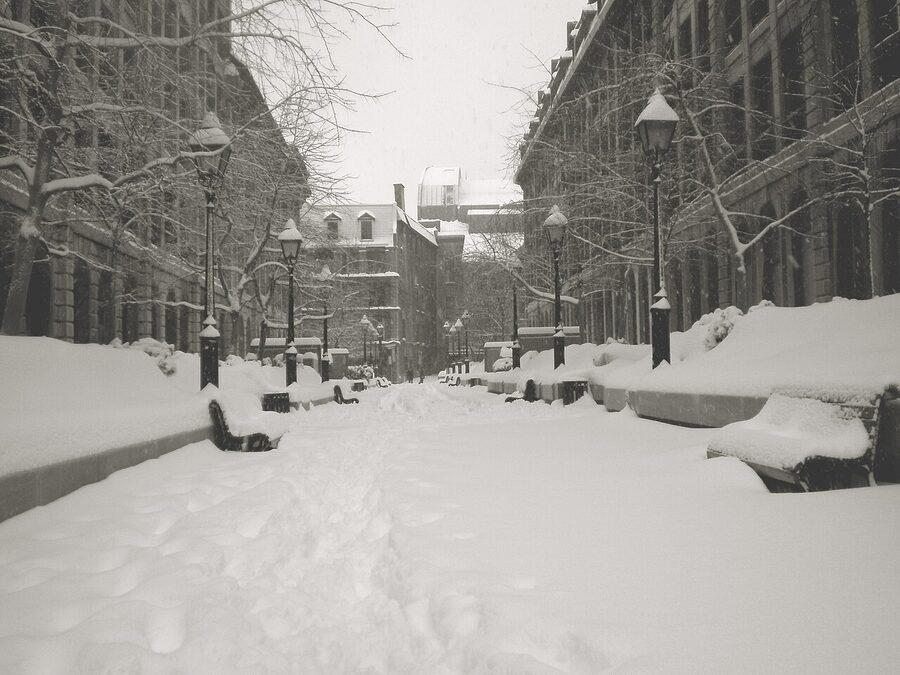
From mid-November through March, it’s a different walk. The terrasses come down, half the river-facing restaurants close, and the wind off the St. Lawrence is brutal. But the Bonsecours Basin becomes a skating rink, the Igloofest electronic music festival takes over the Old Port for a few weekends in January, the Christmas market runs through December, and Notre-Dame, Pointe-à-Callière, the Bonsecours Market, and most museums are open all winter. The crowds thin out enormously, the cobblestones look great with snow on them, and you can have rue Saint-Paul almost to yourself on a Tuesday afternoon. Wear actual winter boots (the cobbles get icy), layer everything, and warm up at any of the cafés. I genuinely prefer Old Montreal in February to Old Montreal in July, but I’m a Montrealer and I have a real winter coat.
April and November are the awkward months. Cold, often wet, terrasses still down or just coming back, that grey light. Doable but not the version of Old Montreal you’ll remember.
If you’ve got more time
If a half day in Old Montreal turns into a full day, here’s how I’d extend.
Add Saint Helen’s Island. Take the metro one stop east on the yellow line to Jean-Drapeau and you’re on the island that hosted Expo 67. Buckminster Fuller’s geodesic dome (now the Biosphere environmental museum), the Old Fort, and a great waterfront walk with the city skyline opposite. Add three hours.
Walk up to Chinatown. Old Montreal’s northern edge is rue Notre-Dame; cross it, walk through the long park (Champ-de-Mars), and you’re on the edge of Chinatown in 12 minutes. Lunch on Saint-Laurent. Add 90 minutes.
Loop in the brewpub crawl. If you want a longer afternoon-into-evening, finish the Old Montreal walk at the Quays and then catch the orange line three stops north to Mont-Royal. The Plateau brewpub stretch starts there. You can do an entire night on Saint-Denis without changing trains.
Add the bigger Montreal context. Old Montreal is a small slice of a real city. If this walk is your introduction and you’ve got two more days, the bagel war, smoked meat, Mount Royal, the Plateau, Mile End, and the museums up on Sherbrooke are all separate things. My broader list of things to do in Montreal covers them; come back here when you’ve had the wider city.
If you’re new to the city
One last thing. If you’re not visiting but actually moving here, this walk is also useful as orientation. Most newcomers arrive thinking “Old Montreal is the city” and then realize a week later that it’s basically the city’s living room: nice for company, but the actual day-to-day life happens in the Plateau, Mile End, Hochelaga, NDG, Verdun, and the rest of the inner neighbourhoods. Spend a Sunday on this walk in your first month, then go look at the neighbourhoods you might actually live in. My moving-to-Montreal guide covers the residential side properly.
That’s the whole route. Three to five hours, one metro fare in each direction, three real museums, two iconic buildings, the river, and roughly 380 years of city history compressed into about three flat kilometres. Wear the shoes. Skip the maple shops. Eat at Olive et Gourmando.