

Where do Montrealers actually drink craft beer when they’re not at the obvious Plateau bar? Honestly, in the same handful of places, on rotation, depending on the night. There’s the brewpub you bring your parents to, the one you go to after work because it’s a five-minute walk from the metro, the one for the loud birthday, and the one for when you actually want to taste what’s in your glass. The list below is that rotation, plus a few stops that are worth the detour out of your usual neighbourhood.
Quebec has been a craft beer place for longer than most of North America. Le Cheval Blanc got the first licensed brewpub permit in Montreal in 1986. The 1990s and 2000s built it up slowly. Then somewhere around 2012 it exploded, and now there are more than a hundred microbreweries in the province and roughly forty in the city itself, depending on how you count satellite taprooms. You don’t have to try hard to find good beer here. You have to triage.
In This Article
- Why the law matters (briefly)
- Dieu du Ciel! (Mile End)
- Brasserie Harricana (Petite-Patrie)
- Vices & Versa (Petite-Patrie)
- Le Cheval Blanc (Quartier Latin)
- L’Amère à Boire (Quartier Latin)
- Brutopia (downtown / Crescent)
- Benelux (downtown and Verdun)
- Isle de Garde (Petite-Patrie)
- Broue Pub Brouhaha (Hochelaga and Rosemont)
- Mabrasserie (Rosemont)
- McAuslan / Brasserie St-Ambroise (Saint-Henri)
- The dépanneur and the SAQ (or, drinking at home)
- How to plan a brewery crawl
- What I’d skip
- Practical notes
Why the law matters (briefly)
Quebec splits the licensing into two main categories that visitors should know about, because it shapes where you can drink what. A brasserie artisanale (artisanal brewery, also called a brewpub) brews on the premises and serves on the premises. A microbrasserie (microbrewery) can brew, package, and distribute through grocery stores, dépanneurs, and the SAQ (Société des alcools du Québec, the provincial liquor monopoly). Plenty of places hold both licences and run a taproom plus a distribution arm, which is why your favourite local can also end up in a can at the corner store.
That second part is the one Quebec is unusual for. In Ontario and most of the rest of Canada, craft beer is locked into government-owned liquor stores or specialty chains. In Quebec, the dépanneur on your street corner sells St-Ambroise, Dieu du Ciel cans, 4 Origines, Boréale, and a constantly rotating wall of small-batch stuff. If you’ve moved here from Toronto or Vancouver this is one of the small daily improvements. If you’re moving to Montreal from outside Canada it’s worth knowing the legal drinking age in Quebec is 18, the lowest in the country alongside Alberta and Manitoba. Anglophone college kids from Vermont and New York have been making the bus trip up for that reason since forever.
Dieu du Ciel! (Mile End)
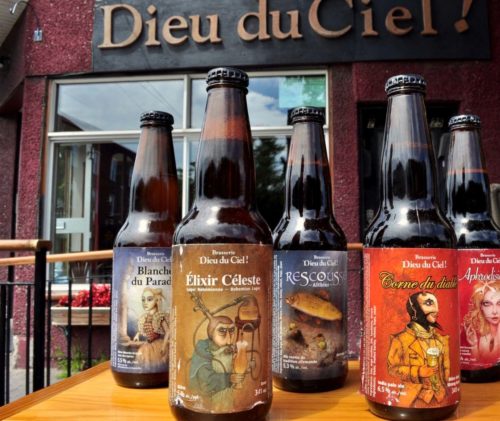
If you only have one night and you ask a Montrealer for a single recommendation, this is the one almost everyone names. Dieu du Ciel! (which translates to “God in heaven” or, more idiomatically, “for the love of God”) opened the Mile End brewpub at 29 Avenue Laurier Ouest in 1998 and has been the centre of gravity of the Montreal craft scene ever since. The room is small. There’s a long bar, a few tables, and a noticeboard of beers in chalk that changes constantly because there are usually fifteen-plus on tap and only four or five are mainstays.
The one to order is Péché Mortel (mortal sin), a coffee imperial stout that put them on the international map. It’s heavy. It’s nine percent. It tastes like espresso and dark chocolate and it’s better on draft here than anywhere else because it doesn’t travel as well as the cans suggest. After that try whatever sour, saison, or wild ale they’re rotating. Their IPA program is good but it’s not why you’re here.
The honest catch is the wait. On any Friday or Saturday night after eight there’s a queue out onto Laurier and you’re not going to sit down without an hour of patience. Go early, like five-thirty or six on a weeknight, or accept that this is a stand-up-near-the-window night. The food menu is small bar snacks; eat dinner first.
Brasserie Harricana (Petite-Patrie)
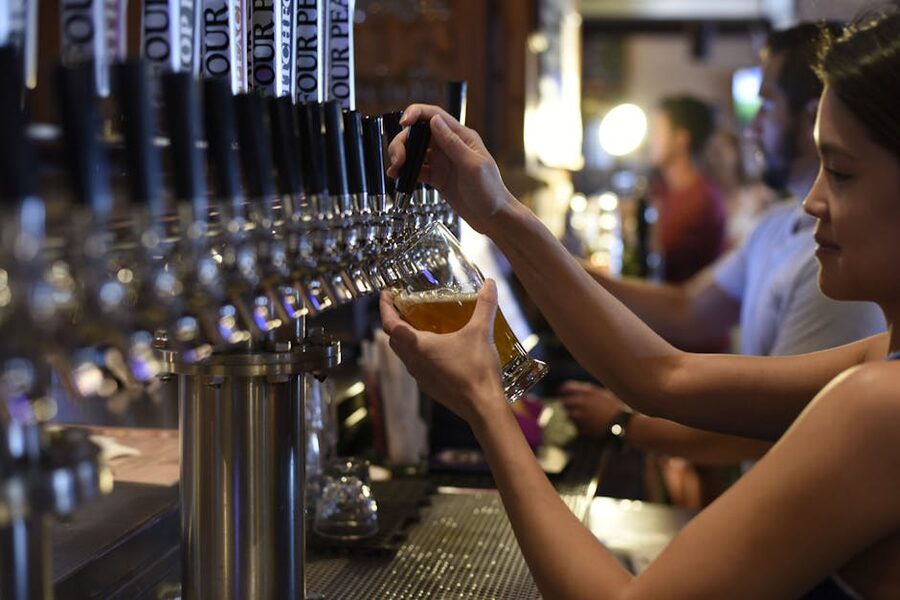
Harricana sits at 95 rue Jean-Talon Ouest, two blocks west of the Jean-Talon market, which is the practical detail that makes it work. You can spend a Saturday morning at the market buying produce and cheese, then duck in here for lunch and a beer when you’re done. The room is bright and high-ceilinged, with a brass-and-tile bar and one of the more visually interesting tap walls in the city. They were the first bar in Canada to install the Flux Capacitor system, which lets each tap line run its own temperature and carbonation. It sounds like marketing nonsense; it actually does make a difference on the lighter beers.
Harricana brews on site and they’re open from 11:30am most days, which is rarer in Montreal than you’d think; a lot of brewpubs don’t open the doors until late afternoon. The food is closer to a proper restaurant than typical pub fare. They do a good house-cured charcuterie and decent fries. If you’re going on a Friday night, expect Quartier-Latin-on-a-Thursday energy by ten. They take reservations and you should use them.
Vices & Versa (Petite-Patrie)
This one is technically not a brewpub, which is the entire point. Vices & Versa, on the corner of Saint-Laurent and Beaubien, is a Quebec-only craft beer bar. They don’t brew. They curate (and yes, I know that word is on the banned list everywhere else, but here it actually means what it means: someone is choosing thirty-plus rotating taps of small-batch Quebec beer that you mostly cannot find anywhere else in the city, including the breweries’ own taprooms).
This is where you go when you’ve already done a couple of brewpubs and want a side-by-side of three sours from three different Eastern Townships breweries you’ve never heard of. The carrousel of six small glasses (their palette de dégustation, or tasting flight) is the right move. The room is small and gets warm; the back terrasse is excellent in summer. The food is honest bistro stuff, not memorable, but it does the job between rounds.
Le Cheval Blanc (Quartier Latin)
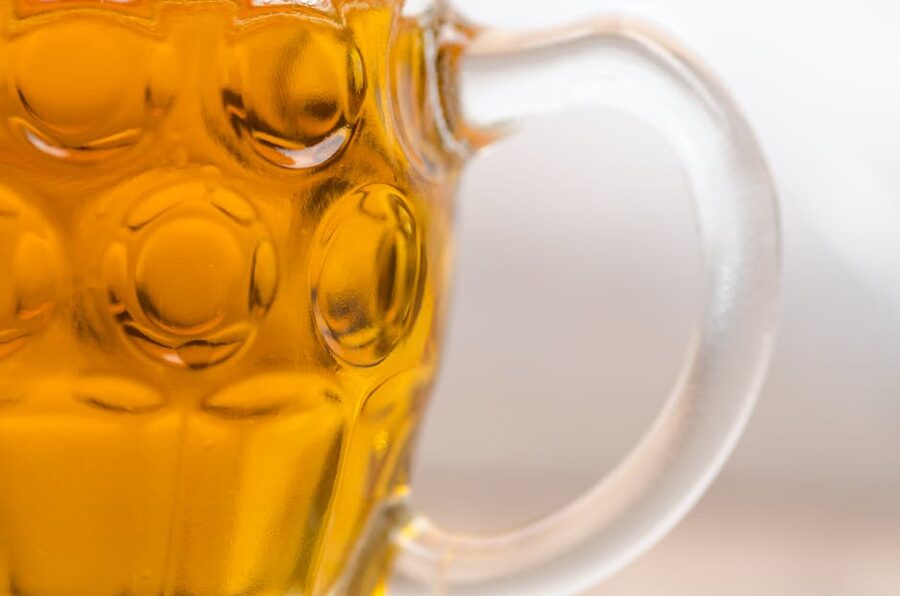
If you care about how the Quebec craft scene actually started, this is the historic stop. Le Cheval Blanc (the white horse) at 809 rue Ontario Est got the first brewpub licence in Montreal in 1986 and started brewing on premises in 1987. The building itself has been a tavern of one kind or another since 1924. The current room is Art Deco, neon-lit, with vinyl booths and a pressed-tin ceiling that’s seen forty years of cigarette smoke and now (post-2006 indoor smoking ban) just looks great in the dim light.
The beer is straightforward by 2026 standards. Their flagship is the Cheval Blanc witbier, the spiced Belgian-style wheat beer that gave its name to a whole national category once Labatt licensed the recipe. Order a pint and a basket of fries, sit in a booth, and pretend it’s still 1992. This is not where you go for an experimental NEIPA. It’s where you go because you should know what the beginning looked like. Metro Berri-UQAM, walk three minutes east on Ontario.
L’Amère à Boire (Quartier Latin)
A short walk north from Cheval Blanc, on rue Saint-Denis above Sherbrooke, L’Amère à Boire (the name is a bilingual pun: “the bitter to drink” and also “la mer à boire,” which means an impossible task, like drinking the ocean) is the central European corrective to all the New England IPAs everyone else is brewing. They specialise in German and Czech styles, with a permanent cellar lager program and a rotating set of altbiers, kölsches, and a Czech-style pilsner that’s better than ninety percent of what you’ll find at any pilsner-pretending bar in the city.
The terrasse on Saint-Denis is the draw in summer. The interior is two floors of warm wood and copper kettles, and on a winter Tuesday there are usually a dozen UQAM grad students arguing about something at the back tables. Food is German-leaning, which fits the room: sausage plate, schnitzel, decent pretzels.
Brutopia (downtown / Crescent)
Brutopia is downtown Montreal’s longest-running brewpub, on Crescent Street between Sainte-Catherine and René-Lévesque, and it has its own micro-ecosystem. Three floors, three different rooms with three different vibes. Ground floor is a regular pub, second floor is loud with live music most nights, third floor has a small terrasse and a pool table. They’re open from 3pm to 3am every day.
I’ll be honest about who this is for. Brutopia is the brewpub for Concordia and McGill students, anglophone exchange students, and the Crescent Street weekend bachelor-party crowd. The beer is solid (try the Raspberry Blonde or the Nut Brown), but the room is rarely about the beer. It’s about being on Crescent on a Saturday and not paying twelve dollars for a bottle of Bud at one of the sports bars next door. If you’re new in town and want to meet other newcomers in English, it’s a good first stop. If you live here, it’s a 2am-on-Crescent thing.
Benelux (downtown and Verdun)
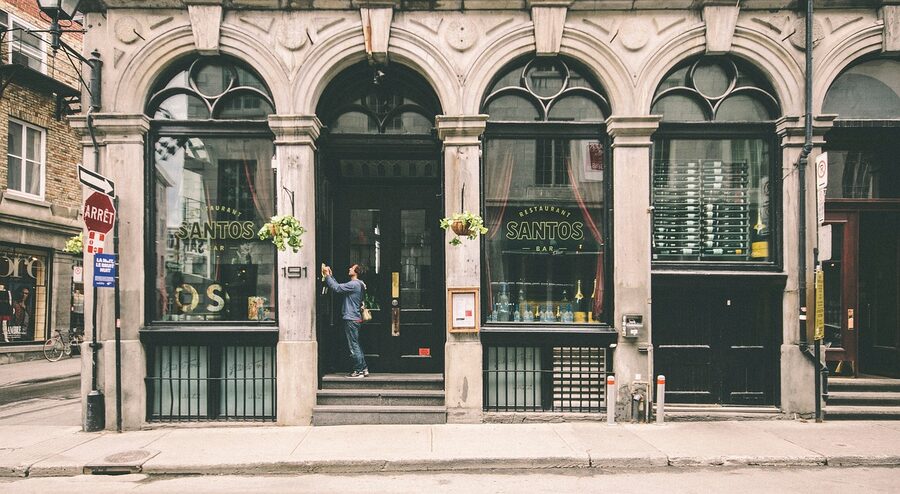
Two locations: 245 rue Sherbrooke Ouest near McGill, and 4026 rue Wellington in Verdun. The Sherbrooke one is closer to the Place des Arts / Quartier des Spectacles area and is the after-show stop if you’ve been to a show at the Place des Arts complex or Théâtre du Nouveau Monde. They brew their own and rotate twelve or so on tap; the IPAs are usually the strongest section of the menu. They do a pretty good 5à7 (cinq à sept, the post-work happy-hour ritual that runs roughly five to seven), which gets crowded by six on weekdays.
The Verdun location is newer and feels more neighbourhood. Verdun has quietly become one of the most interesting parts of the city for food and drink in the last five years, and Benelux fits in with the rest of Wellington Street. If you’re already heading down for a walk along the Lachine Canal or the riverside boardwalk, plan to end up there.
Isle de Garde (Petite-Patrie)
Isle de Garde lives at 1039 Beaubien Est, in the heart of la Petite-Patrie which has quietly become the densest brewery cluster in the city (Harricana, Vices & Versa, and Isle de Garde are within a fifteen-minute walk of each other and that’s before you count Mellön and Mabrasserie one neighbourhood over). The room is bigger than it looks from outside, with a 24-tap bar, lots of communal wood tables, and a kitchen that punches well above its pub-grub weight class. Duck tartare, decent burgers, vegetable gnocchi when they have it.
They specialise in barrel-aged and farmhouse styles. Their saison program is one of the better in the city and the staff actually know what they’re talking about. No reservations, which is annoying because the place fills up by seven on a weekend, but the wait is usually shorter than the Dieu du Ciel queue.
Broue Pub Brouhaha (Hochelaga and Rosemont)
Brouhaha (which is just the French word borrowed back into English; it means a noisy commotion, which fits) has two locations in the east end. The original is in Hochelaga-Maisonneuve and the second is on Papineau in Ahuntsic. They’re a member of the Mabrasserie cooperative and they run one of the more eclectic tap lists in the city, leaning toward stouts, browns, and porters more than the standard IPA-heavy selection elsewhere.
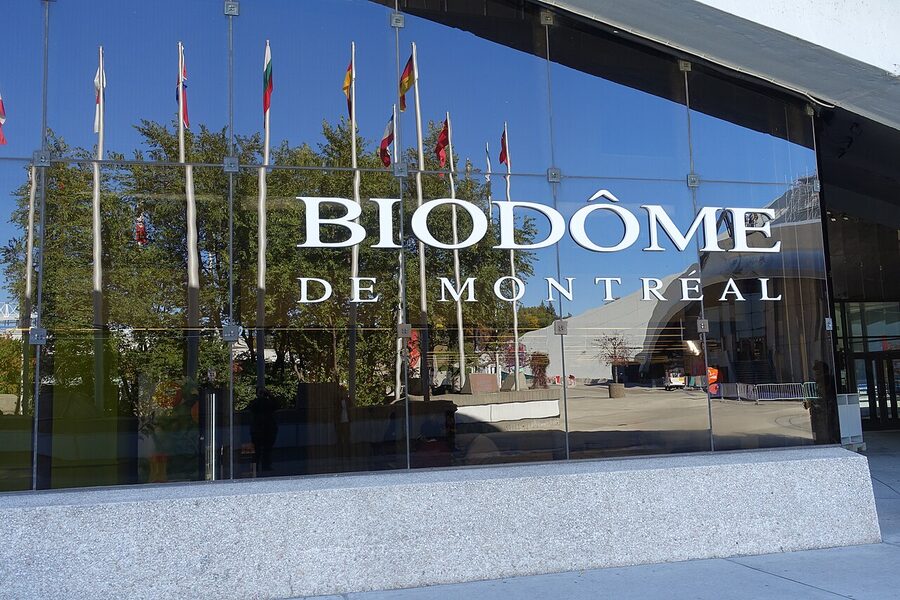
The Hochelaga room has the better neighbourhood feel. Hochelaga (formally Hochelaga-Maisonneuve, named for the Iroquoian village Cartier visited in 1535 and the early-1900s industrial suburb that grew east of it) is one of the parts of Montreal that’s gentrified hard in the last decade and the bar reflects that, with a mixed crowd of long-time locals and newcomers, decent food, no pretension. Worth the trip out from downtown if you’re already going to the Olympic Stadium, the Botanical Garden, or the Biodôme.
Mabrasserie (Rosemont)
This is the one most lists skip and it’s actually the most interesting from a how-does-the-Montreal-craft-scene-work perspective. Mabrasserie at 2300 rue Holt is a brewing cooperative. Member breweries (currently including Isle de Garde, Boswell, Mannanova, Broue Pub Brouhaha, and Noire et Blanche) share the production facility and pool overhead, which is how a lot of the smaller players in town keep going. The Rosemont tasting room serves 32 beers on tap from across the cooperative, plus a small bottle shop where you can grab cans from any of the member breweries to take home.
The room is industrial and not particularly designed; the picnic-table terrasse out back is the move in summer. Go on a Saturday afternoon if you want a tasting flight that gives you a snapshot of half the small breweries operating in Montreal at once. It’s also the only place in town where you can grab cans from all of them in one stop, which is useful when you’re hosting and don’t want to spend an hour at the SAQ.
McAuslan / Brasserie St-Ambroise (Saint-Henri)
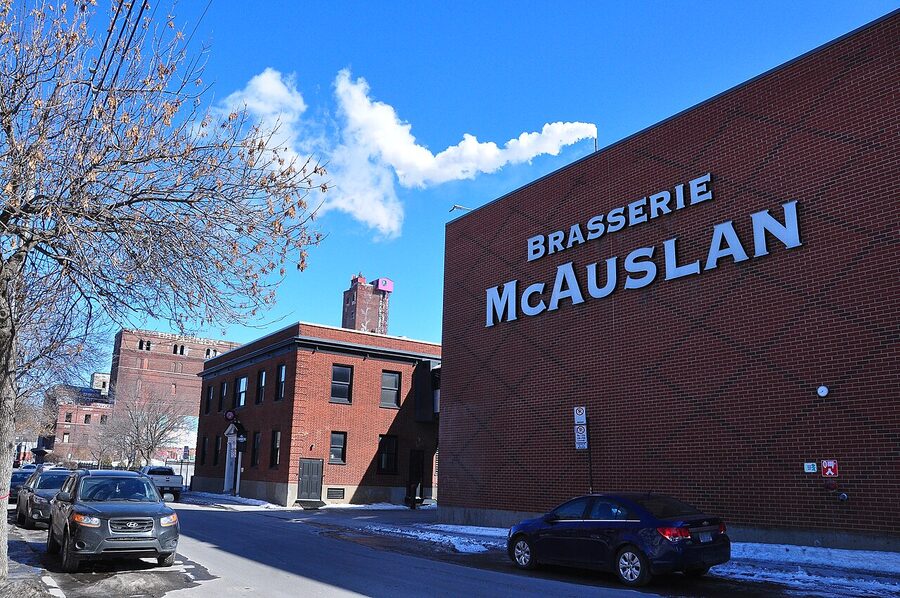
St-Ambroise is the first craft brand most Montrealers ever drank, and probably your introduction to Quebec beer if you’re new in town. The brewery sits at 5080 rue Saint-Ambroise in Saint-Henri, right on the Lachine Canal, and from late spring through early autumn they open the Terrasse St-Ambroise, a big canalside patio that’s one of the best summer drinking spots in the city. Bring a bike along the canal path, post up with an Apricot Wheat or the Oatmeal Stout, and that’s a Saturday afternoon sorted.
The food is bar food (burgers, sausage, fries) and it’s competent rather than special; you’re here for the location and the beer. The St-Ambroise Pale Ale was the first cask-conditioned ale brewed in Quebec in 1989 and is still the most reliable craft option available in any dépanneur in town. The Oatmeal Stout is the one to get if you’ve never tried it. Note: the terrasse is only open in warm weather, so check Instagram before trekking out.
The dépanneur and the SAQ (or, drinking at home)
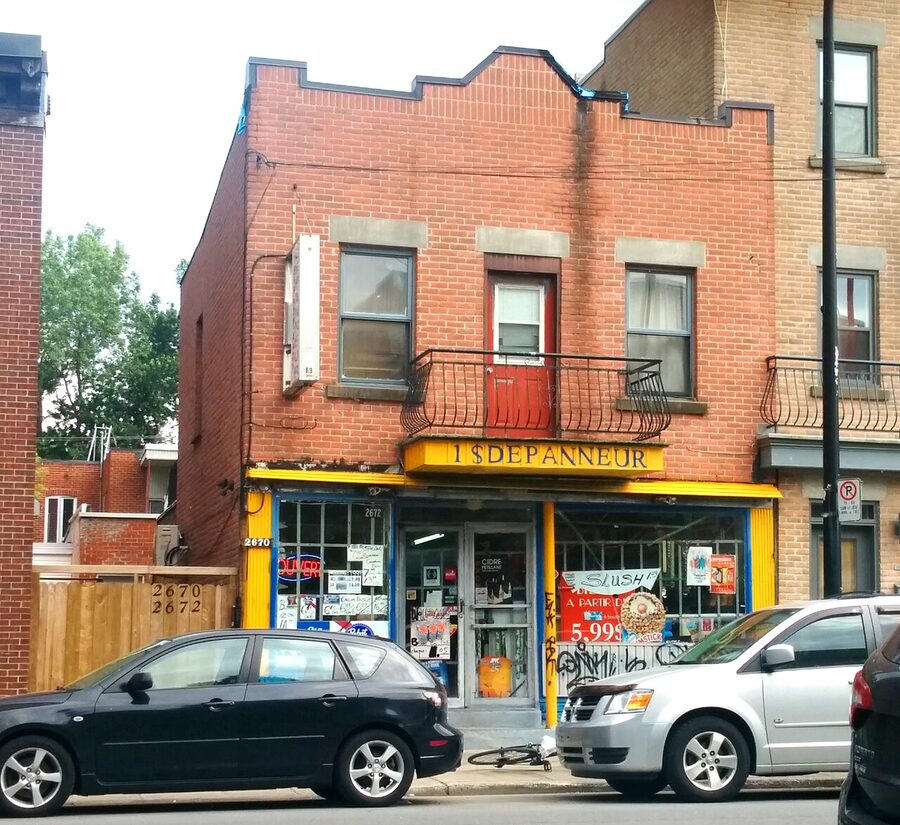
The other half of Montreal craft beer happens in your apartment. The dépanneur (literally “the rescuer” in French, in the sense of fixer or someone who gets you out of a jam, applied to the corner store because it sells you the thing you forgot at the grocery store) is where most weeknight beer is bought. Quebec’s licensing rules let private corner stores stock cans and bottles up to 11pm. After 11 you have to go to a bar, which is by design; the law was written to nudge people away from solo home drinking late at night. After about a week of living here you’ll know which dépanneur in your neighbourhood actually keeps cold stock and which one has been selling the same warm cans of Boréale since 2019. There’s always a difference.
For better selection, the bigger dépanneurs (Pop in Saint-Henri, Veux-Tu Une Bière in Verdun, Marché Loblaws-adjacent stops in NDG) carry rotating cases of Dieu du Ciel, Brouhaha, Isle de Garde, 4 Origines, Boswell, Pit Caribou from Gaspésie, and dozens of out-of-town breweries. Cans are usually four to seven dollars each, before tax. Quebec’s combined sales tax is 14.975 percent (federal GST plus provincial QST), which is included on the menu price at bars but tacked onto the dépanneur receipt at the till, so an eight-dollar can ends up at nine-something.
The SAQ is the provincial liquor monopoly and they handle wine and spirits primarily. They do carry a smaller craft beer selection, mostly imports plus a few Quebec breweries, but for local beer the dépanneur and the breweries’ own bottle shops are better. The SAQ is where you go for whisky, natural wine, and Champagne.
How to plan a brewery crawl
If you have one night, do Mile End: Dieu du Ciel for the first round and walk seven minutes south to one of the wine bars on Saint-Viateur or Bernard for the second. If you have an afternoon, do la Petite-Patrie: start at Harricana around 2pm for lunch, walk to Vices & Versa for an early flight, end at Isle de Garde for dinner. The whole circuit is under twenty minutes of walking between stops.
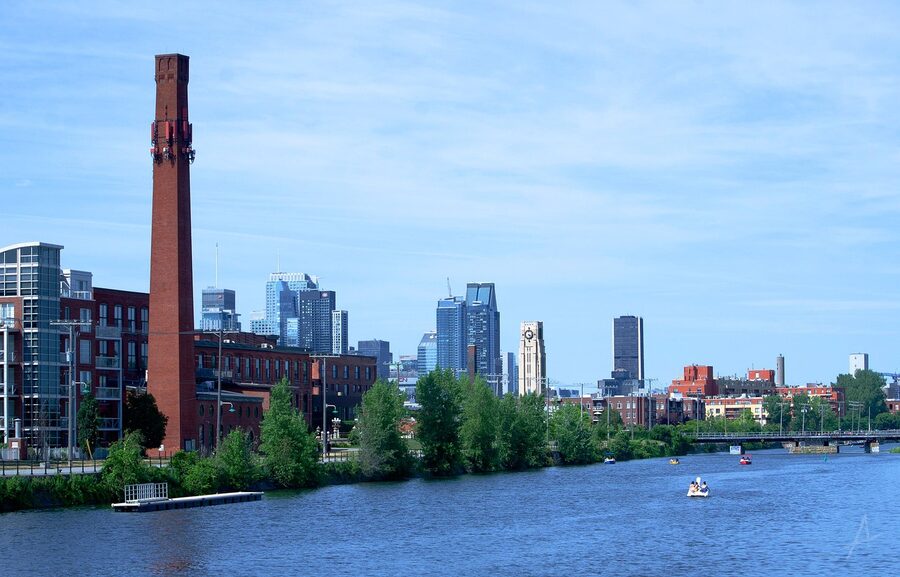
If you have a Saturday, do the Lachine Canal route. BIXI from downtown along the canal path, stop at McAuslan’s Terrasse St-Ambroise mid-ride, continue to Verdun and the Benelux Wellington location, loop back. It’s twelve to fifteen kilometres of mostly flat path and you’ll need a sandwich somewhere in the middle. Good summer day plan in general; pair it with the Atwater Market.
The east-end day is Brouhaha to Mabrasserie to whichever new place has opened in Hochelaga in the past six months. Combine it with the Olympic Stadium tower or the Botanical Garden and you have a real day out. The metro green line drops you at Préfontaine or Pie-IX and you can walk between stops.
Old Montreal doesn’t really have a brewpub of its own that locals go to (Brewskey in Bonsecours Market is the closest, and it’s fine) so if you’re walking the old city and want a beer, Brutopia and Benelux on Sherbrooke are both about twenty minutes north on foot. Le Cheval Blanc is fifteen minutes east on rue Ontario.
What I’d skip
The hotel-bar craft beer scene downtown is mostly forgettable. There’s a category of place that calls itself a brewpub but pours all guest taps; you can recognise them because the names on the chalkboard are all from out of province and there are no brewing tanks visible. Nothing wrong with a guest-tap bar, but you can do that at home and save the trip.
Tour buses with branded vans that stop at three breweries: fine if you don’t have the legs to do it yourself, but you’ll pay a hundred dollars for what’s three Métro stops and four pints. If you can walk and read a map, the brewery crawl is free.
And the Cheval Blanc on rue Ontario in summer at 1am on a Saturday is a tourist trap version of itself; go on a weeknight at 8pm if you want to see what makes it worth visiting.
Practical notes
Most brewpubs open at 3pm or 4pm, except Harricana, Mabrasserie’s tasting room, and Isle de Garde, which open earlier. Last call in Montreal is 3am. The metro shuts at 12:30am Sunday to Friday and 1am Saturday, which matters because some of the best brewpubs are not on the orange or green line. Plan a 12:30am exit or know your bus routes (the 80 runs Park Avenue, the 51 runs Jean-Talon, the 24 runs Sherbrooke).
Tipping is 15 to 20 percent of the pre-tax total at a sit-down place. At a counter brewpub where you order at the bar and pay there, a dollar or two per round is normal. Card is accepted everywhere; cash is rarely needed, but a couple of the older spots (Cheval Blanc included) still prefer it for small tabs.
Pints in Montreal brewpubs run roughly 7 to 10 dollars CAD before tax, depending on the strength and the venue. A tasting flight of four to six small glasses is usually 12 to 18 dollars and is the better-value way to taste a brewpub if you’ve never been. Bottles and cans to go from a brewery’s own boutique are usually 5 to 7 dollars per 473ml can, and you do not have to be a member of anything to buy them.
Lastly, French is the working language at most of these bars but the staff at every single one I listed will switch to English the moment you order in English. There’s no friction. Order in whichever you’re more comfortable in and they’ll meet you there. Santé.